

1. What is P20 Tool Steel?
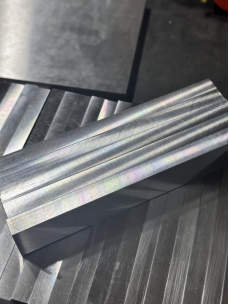
- P20 tool steel is a pre-hardened alloy steel commonly used for plastic mold manufacturing. It offers a good balance of strength, toughness, and machinability, making it suitable for medium and large molds.
- Unlike many other tool steels, P20 is typically supplied in a pre-hardened condition, which means it can often be machined directly without additional heat treatment. This feature significantly reduces processing time and production costs in mold manufacturing.
- Due to its stable performance and consistent hardness, P20 steel is widely used in industries such as automotive parts, electronics housings, and consumer plastic products.
2. Chemical Composition of P20 Steel
The typical chemical composition of P20 tool steel includes the following elements:
| Element | Content (%) |
| Carbon (C) | 0.28 – 0.40 |
| Chromium (Cr) | 1.4 – 2.0 |
| Manganese (Mn) | 0.6 – 1.0 |
| Silicon (Si) | 0.2 – 0.8 |
| Molybdenum (Mo) | 0.3 – 0.55 |
These alloying elements enhance the steel’s hardenability, wear resistance, and toughness, allowing it to perform well under repeated molding operations.
3. Key Properties of P20 Mold Steel
3.1. Excellent Machinability
P20 steel is known for its good machinability, which allows manufacturers to efficiently produce complex mold shapes and details.
3.2. Pre-Hardened Structure
The steel is usually supplied at a hardness of about 28–32 HRC, eliminating the need for additional hardening treatment in many cases.
3.3. Good Toughness and Strength
P20 steel provides a balanced combination of strength and toughness, allowing molds to withstand high pressure during injection molding processes.
3.4. Excellent Polishing Performance
Its uniform micro-structure allows the material to achieve a high surface finish, making it ideal for molds used to produce plastic parts with strict appearance requirements.
4. Typical Applications of P20 Steel
Thanks to its stable mechanical properties and easy machining performance, P20 steel is widely used in:
- Plastic injection molds
- Die-casting molds
- Blow molds
- Mold bases and holders
- Tooling components
It is especially suitable for medium-volume plastic production molds and general tooling applications.
5. Conclusion
P20 tool steel remains one of the most widely used plastic mold steels due to its excellent machinability, balanced mechanical properties, and reliable performance.
For manufacturers seeking a cost-effective material for plastic injection molds or tooling components, P20 steel provides a dependable solution with stable quality and long service life.