

What Is a Duplex Milling Machine
Tackling Heavy Steel Blocks
An overhead crane at the top of the workshop lowers an 800 kg P20 mold steel block onto the table with a dull thud. The block is covered in a hard black oxide scale, and some areas reach a hardness of HRC35. On a conventional single-head machine, the cutter tends to deflect backward and can only bite off 2 mm at a time.
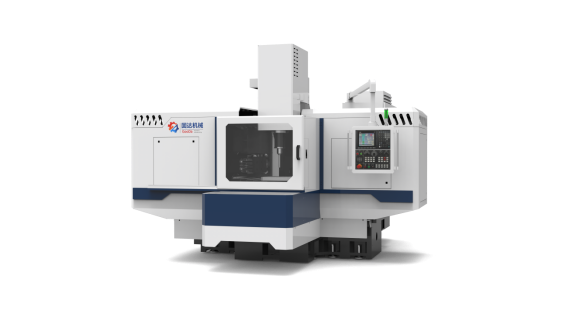
The machine itself is massive. The cast-iron base alone weighs 15 tons, keeping vibration firmly under control while cutting steel. Two 22 kW motors run simultaneously, driving 250 mm cutter heads. The cutting sound is not sharp, but a deep, heavy rumble. Each pass can cut 8 mm deep into the steel, sending chips flying like rain.
At the point where the cutter meets the steel, the temperature can surge to 800°C. Without coolant, the inserts would burn and fail in less than three minutes. The pump sprays 50 liters of milky emulsion per minute directly onto the cutting zone, producing thick white vapor. The chip conveyor has to haul away 150 kg of scrap per hour and must keep moving at full speed to avoid clogging.
Tooling for heavy steel cutting is highly demanding:
· The insert body is made of 42CrMo alloy steel
· Each cutter head carries 12 to 16 carbide inserts
· The insert surfaces are coated with CVD to withstand high temperatures
· The cutting edge is given a slight downward tilt to reduce impact chipping
Q235 mild steel is relatively easy to machine, but Cr12MoV cold-work die steel is far more difficult. Its tensile strength exceeds 1600 MPa. The moment the insert touches the block, the tiny cutting point—less than 2 mm²—has to withstand hundreds of kilograms of tearing force. Operators must reduce the feed rate by 15%, or the cutting edge will fail on the spot.
Both cutter heads are set to advance at 300 to 500 mm per minute. The leadscrew driving the machine is 63 mm in diameter and built to P3 precision grade. The left and right cutters enter the block at the same time. The enormous forces meet inside the steel and cancel each other out.
Even a slender steel bar 1.5 meters long will not bend under pressure. The old problem of a 0.5 mm bulge in the center during one-sided cutting disappears completely. Hydraulic clamps at both ends grip the material with 4 MPa of pressure, locking it rigidly in place from start to finish.
The steel itself has a major impact on tool life:
· Rough blanks with hard black scale wear inserts 30% faster
· Annealed steel allows one insert to remove 800 cm³ of material
· Materials with more than 3% nickel tend to stick badly to the cutting edge
Take a 600 mm × 400 mm block of 45 steel as an example. On a traditional single-head machine, removing the scale from two sides took 45 minutes. With the spindle speed set at 800 rpm, the block now passes steadily through the cutting zone, and with both sides machined at once, the same job is completed in just 18 minutes.
Before machining starts, the operator must verify several key values on the screen:
· Whether the two axes are aligned, with deviation no greater than 0.01 mm
· Whether the oil chiller is holding the temperature at exactly 25°C
· Whether the support blocks under the steel provide more than 80% contact area
· Whether the guideway lubrication pressure reaches 1.2 kg
After a heavy cutting cycle, the machined surface ends up at roughly Ra6.3. It feels slightly warm to the touch, around 40°C. Dimensional error is held firmly within ±0.03 mm. The rough black scale is gone, replaced by a bright silver-gray metallic surface.
The machine can run this aggressively because it is supported by wide, heavy-duty guideways. The travel reaches 2000 mm, and six large linear blocks distribute the impact of dozens of tons of force. Every 500 operating hours, workers must inject lithium-based grease into 24 lubrication ports. If the machine is not leveled properly—more than 0.02 mm per meter out of level—it will vibrate during cutting.
The foundation is equally critical. A pit at least 1.5 meters deep must be excavated. The bottom is filled with 300 mm of reinforced concrete, with 16 heavy anchor bolts embedded inside. Even if an 80-ton stamping press is operating nearby, the polyurethane pads under the foundation can absorb 90% of the transmitted vibration.
Standing beside the machine in safety boots, you can still feel the fine tremor through the floor. The machine occupies 12 square meters, and the air around it hums from the spinning cutter heads. The 10 mm bulletproof glass shield is splashed with yellow oil mixed with iron dust. The operator walks to the exit side with a 600 mm caliper to measure the freshly cut block.
Parallelism & Perpendicularity
Old Wang holds a dial indicator with 0.002 mm resolution and sweeps it back and forth across an 800 mm P20 mold steel block. The needle barely moves, never shifting more than half a division. The parallelism error between the top and bottom faces is less than one-tenth the thickness of a human hair.
On a large surface grinder, workers used to wrestle heavy steel blocks again and again. They would insert three 0.01 mm copper shims just to level the part. If even a tiny chip—too small to see with the naked eye—got underneath, the opposite side would immediately lift by 0.05 mm.
Now, two 250 mm cutter heads hang on the left and right like a pair of hands clamping the block in the middle. Hydraulic clamps apply 6 MPa of force, locking the workpiece firmly in place. With both cutters working at the same time, the two finished faces are inherently parallel.
Spindle alignment error is held within 0.005 mm. The cutters rotate at 600 rpm while the machine bed feeds the block forward at a constant speed. The cutting forces from both sides meet in the middle and balance each other perfectly.
But parallelism alone is not enough. In mold making, right angles are just as critical. If a machinist’s square shows more than 0.02 mm of light leakage, the guide pillars may bind during assembly. In the past, workers had to align the piece manually with a square, spending half an hour only to end up with an angle that was still off.
Below the machine is an 800 mm rotary table driven by a servo motor. After the first pair of faces is cut, the operator presses a green button and the 2-ton block rotates 90 degrees while staying perfectly level. The indexing error inside the rotary table is less than 3 arcseconds—the equivalent of only 15 mm deviation over a distance of one kilometer.
We compared a 600 mm square block of Cr12MoV mold steel on different machines to see how the tolerances really differ:
| Measurement Item | Traditional Single-Head Machine (multiple re-clampings) | Duplex Milling Machine (with rotary table) | Measuring Tool |
| Parallelism between two faces | About 0.04 mm | Within 0.01 mm | Granite surface plate + dial indicator |
| Perpendicularity error | 0.03 mm (operator-dependent) | 0.008 mm (fixed value) | Grade 0 knife-edge square |
| Diagonal deviation | 0.10 mm oversize | 0.025 mm | 1 m digital caliper |
| Surface flatness | 0.025 mm (center bulge) | 0.01 mm (uniform force) | Laser interferometer |
Steel expands when heated and contracts when cooled. In single-head cutting, the top surface can reach 200°C while the bottom face against the fixture remains at room temperature. That temperature difference can bend an otherwise square block into a banana shape, creating a 0.03 mm bulge in the center.
With simultaneous cutting from both sides, the heat is distributed evenly. Two large chillers keep the cutting oil at 22°C. Six nozzles on each side blast coolant directly at the cutting edge, delivering 100 liters per minute. When the work is done, the block is only about 45°C and has had no chance to distort from heat.
Fresh steel plates also contain internal stress. If only one side is skimmed, the balance is broken and the plate can spring upward by 0.2 mm. Stripping both sides at the same time is like releasing a stretched rubber band from both ends simultaneously. Once the part comes off the machine, it stays flat.
The clamp jaws are made of special alloy steel hardened to HRC55. They grip only 5 mm of the material at the bottom edge. Even with just that small contact area, plus the anti-slip grid texture, they can withstand a 6 mm one-sided cutting load without allowing the block to move even 0.01 mm.
Measure any 8 random points on the finished block and every dimension falls within ±0.015 mm. In the past, the part still had to go to precision grinding afterward. Now that step can be eliminated entirely. Shiny silver blocks are loaded out by forklift in full pallets and sent straight to the next drilling process.

Reducing Cutting Time
At 8:00 in the morning, 50 rough S50C mold steel blanks are stacked in the corner of the workshop. Each one measures 400 × 400 × 150 mm, with a rough, abrasive surface. The old single-head milling machine turns slowly at only 400 rpm, sounding like an exhausted ox pulling a broken cart.
It takes 12 minutes to cut one face. Then the machine has to stop, the heavy clamping plates must be loosened, the crane has to flip the part, and the workpiece has to be aligned again. That whole sequence takes another 10 minutes. In a four-hour morning shift, Lao Li ends up with a sore back and only 6 finished blanks.
Even the most experienced operator loses more than half of the effective working time to repeated loading and flipping. Every minute the machine waits for manual handling is a minute of wasted electricity.
Modern duplex milling machines run at a cutting speed of 120 meters per minute. The left and right spindles attack the block like two starving men. In just 180 seconds, the scale on both sides is stripped away to reveal bright metal.
Across the entire batch of 50 blocks, machining time per piece drops from 45 minutes to 15 minutes—a threefold increase in efficiency. This speed is also made possible by a rapid traverse rate of 20 meters per minute, allowing the cutter heads to jump between workpieces in just a few seconds.
Inside the machine is an oversized 320 mm combination cutter head loaded with 24 carbide inserts. With every revolution, it peels away a substantial layer of metal. The removal rate reaches 500 cm³ per minute, which means a large handful of chips flying off every second.
In batch production, time savings come from many small details:
· Dedicated hydraulic fixtures generate 10 tons of clamping force in 2 seconds
· The automatic tool setter detects the tool tip position in just 0.5 seconds
· The variable-frequency spindle accelerates from standstill to 800 rpm in 3 seconds
· The air-blast system clears chips from the locating surface in 0.1 second
If you have an order for 200 identical parts and save 20 minutes of flipping time on each one, that is a total of 66 hours saved—roughly three full working days.
Long parts are even more revealing. Once the length exceeds 2 meters, ordinary machines need to cut in sections, and every joint leaves a visible 0.05 mm step. A duplex milling machine with a 3000 mm bed can cut straight through in one continuous pass.
Steel also expands as it heats up. With single-head cutting, the long cycle time allows heat to build up inside the workpiece. Duplex cutting dissipates heat from both sides at once, and with 3000 liters of cooling oil circulating every hour, the part stays at just 30°C.
It is not only faster—the inserts last longer under batch production conditions as well:
· Each carbide insert can cut continuously for 120 minutes without edge chipping
· One full set of inserts can process 5 tons of low-carbon steel blanks
· Replacing all 16 inserts takes no more than 8 minutes
· The cutter head is balanced to G2.5 grade, so vibration is almost nonexistent
The CNC system performs 1000 calculations per second. It automatically adjusts the feed rate according to the hardness of the material. When it hits a hard section, the speed drops by 5%. When the cutter moves into empty space, it accelerates immediately. This eliminates the time operators used to waste manually adjusting knobs by feel.
| Process Step | Traditional Method (min) | Batch Duplex Cutting (min) | Time Saved |
| Loading the steel block | 5.0 | 1.5 (automatic clamping) | 3.5 min |
| Alignment and setup | 8.0 | 0.5 (probe detection) | 7.5 min |
| Two-sided cutting | 20.0 | 8.0 (synchronous cutting) | 12.0 min |
| Flipping and rotating | 10.0 | 1.0 (automatic rotary table) | 9.0 min |
On the old single-head machine, the oil pump and fan had to run for 45 minutes. Now they run for only 15 minutes. The electricity saved each month is enough to buy several boxes of imported inserts.
Those oversized mold bases weighing up to 3 tons used to occupy valuable floor space for two full days of machining. Now, with a day shift and an evening shift working back-to-back, they can be completed in 10 hours. The freed-up floor space can immediately be used for the next batch of incoming steel.
Lao Li no longer has to swing a hammer or wrestle with fixtures. He simply scans the job order with a barcode gun, the machining program downloads automatically from the cloud, and after pressing the now-polished start button, he can walk away to lubricate another machine.
Across every 100 finished pieces, dimensional fluctuation stays within 0.02 mm. Forklifts arrive every two hours to remove full pallets from the cutting area, and inventory finally starts to match the records.
Squareness & Steel Blocks
Why Is “90 Degrees” So Difficult?
In a climate-controlled workshop held at 20°C, a crane lowers a 500 kg P20 mold steel block into place. To an ordinary eye, a right angle is just two lines meeting vertically and horizontally. But to a machinist, 90 degrees is a physical limit measured down to 0.001 mm. Requiring all six faces of a heavy steel block to stay within 89.99° and 90.01° on a conventional single-head milling machine is almost a fight against physics itself.
To machine a rough block into a true cube, the operator has to re-clamp the heavy workpiece at least three times in a vise. If even a 0.03 mm iron chip gets trapped under the part, a wrench torqued to 120 N·m will magnify that tiny tilt several times over.
By the time the first face is finished and the part is flipped for the second, a 0.01 mm positioning error has already been introduced. By the fifth and sixth faces, the accumulated errors from repeated re-clamping become clearly visible under a caliper against the light.
When clamping a workpiece, the machinist is constantly fighting invisible sources of error:
· The 0.002 mm elastic deformation caused by vise clamping
· Uneven force applied by hand from left and right
· Thickness variation in the cast-iron parallels underneath
· Micron-level coolant film left behind if the surface is not wiped dry
Steel is not soft clay. 45 steel and Cr12MoV both contain strong internal stresses, like countless compressed springs locked inside. A 125 mm alloy milling cutter spinning at 800 rpm strips away a 2 mm layer of surface material, instantly upsetting the internal force balance.
A dial indicator may show the surface is flat, but if only one side is cut, the released stress causes both ends of the block to curl upward like damp wood. On an 800 mm-long thick steel plate, removing material from just one face can create upward deflection of more than 0.05 mm at both ends.
The cutting edge also generates 400°C of heat, which penetrates deep into the steel. Even with 20 liters of coolant poured over it every minute, the steel still undergoes microscopic thermal expansion and contraction. A theoretically perfect 90-degree angle measured while the part is hot may drift once the block cools on the shelf for 24 hours.
Steel behaves badly for several reasons:
· Rising temperature rapidly expands the internal structure
· One-sided cutting introduces eccentric side force
· Incomplete annealing at the steel mill leaves residual internal tension
· Once the cutting edge wears by 0.01 mm, resistance increases dramatically
When a cutter head hits pre-hardened steel at HRC35, the rebound force travels back through the spindle into the 3-ton cast-iron machine base. The spindle bearings experience slight deflection, and the cutter inevitably shifts a little sideways when it meets a hard spot.
That tiny shift creates a 0.015 mm micro-slope on the finished face. Place a precision square against it and look toward the overhead lights: the bottom sits tight, but at the top a hairline gap appears.
When the cut is just slightly off, skilled workers have to take a flat oilstone, dip it in oil, and manually stone the edge little by little. Correcting less than 0.02° of tilt on a 500 mm square base plate can easily consume four hours of pure manual labor.
Even the measuring tools have their own blind spots:
· A standard caliper cannot detect thousandths of a degree of deviation
· Even the granite inspection plate may have 0.005 mm of flatness error
· Small temperature changes in the shop can affect a dial indicator reading
When a coordinate measuring machine touches all six faces with its ruby probe and the screen shows 89.985°, that expensive steel blank is often scrapped and sent back for remelting. On a conventional machine, trying to achieve perfect 90-degree geometry while fighting gravity, heat, distortion, and human error is incredibly difficult.
Reducing Error at the Source
A new machine is installed in a cleared 20-square-meter area of the workshop to handle that 500 kg P20 mold steel block. The operator skillfully guides the crane hook and places the steel squarely at the center of the table. With one press of the pneumatic switch on the control panel, two hydraulic clamps with anti-slip serrations snap shut instantly. They clamp down on the base with a full 5 tons of force.
On the left and right sides sit two spindle assemblies, each thicker than a man’s thigh and 200 mm in diameter. Behind each is a 50 kW servo motor. Press the start button and two massive cutter heads fitted with 24 carbide inserts accelerate to 1200 rpm in moments.
The left cutter pushes inward with 800 N of force, meeting the right cutter’s equal 800 N force head-on. What used to cause 0.05 mm upward warping in one-sided cutting is now reduced to just 0.002 mm because the forces oppose each other inside the steel.
As the inserts scrape the surface, they generate 350°C of heat. That heat enters a 400 mm-thick steel plate symmetrically from both sides, so internal thermal expansion remains balanced. Heavy coolant pipes above the machine spray 60 liters per minute from three directions. Before the steel has any chance to distort, 3 mm of material is stripped cleanly from both sides.
Machining the first two faces takes less than 15 minutes. Then another servo motor hidden inside the machine body engages, rotating an 800 mm CNC indexing table. The half-ton workpiece turns smoothly without any need to release the clamps or re-indicate the part with a dial indicator.
Beneath the table is a heavy-duty mechanical gear indexing system known in the shop as a mouse-tooth plate—a Hirth-style coupling. Its upper and lower faces engage through 360 precision-ground teeth. When the table reaches position, it locks with a sharp click into the exact 90-degree index. This purely mechanical engagement keeps rotational error within 1 arcsecond, roughly equivalent to splitting one degree into 3,600 parts.
| Shop-Floor Comparison | Old Single-Head Machine with Manual Re-Clamping | Modern Duplex Milling Machine |
| Machining time for a 500 mm steel plate | At least 240 min (including manual stoning) | 45 min (single programmed cycle) |
| Number of re-clampings | No fewer than 3 (each introducing about 0.01 mm of tilt) | 1 (rotation handled by the indexing gear) |
| Accuracy of 90-degree geometry on four sides | ±0.015° (highly operator-dependent) | ±0.002° (mechanically locked in place) |
| Depth of cut per pass | Up to 2 mm (single-side force limitation) | Up to 6 mm (opposed cutting force) |
After the 90-degree rotation, both cutter heads are fitted with fresh inserts and come in again aggressively. The two newly machined bright faces now line up with the first two faces to form a perfect cross. When a CMM checks the adjacent four sides afterward, every reading falls between 89.998° and 90.002°.
The machine’s structural frame is made from 18 tons of high-grade Meehanite cast iron. The base was naturally aged outdoors for half a year to release internal stress, giving it outstanding vibration-damping performance. Even with both motors producing high-frequency vibration around 70 dB, the structure absorbs it effectively. When the cutter head hits hardened steel at HRC40, spindle runout is still held below 0.003 mm.
The spindle travels on 65 mm-wide heavy-duty roller linear guideways. Four rows of large rollers grip the rail grooves tightly, allowing the cutter to feed forward at 800 mm per minute without wandering off course. It does not deflect sideways when it meets a hard area, and the resulting cut face comes out smooth enough to reflect light.
Outside the protective glass, the operator only needs to watch the constantly changing X and Y coordinates on the screen. Four black rough sides are transformed into bright metallic faces. The hydraulic clamps release with a hiss, and the crane lifts the squared block onto a wooden pallet nearby. In a single 8-hour day shift, 12 P20 steel blocks are stacked neatly with virtually no dimensional variation.
Three Industrial Gains
The old plant manager opens a workshop report stained with black machine oil. In the scrap area for the single-head milling team lie 15 P20 mold steel blocks that were machined out of square. A single 600 mm pre-hardened block costs RMB 4,500 just to purchase. All it takes is one 0.05 mm chip trapped under the part during the fourth re-clamping, because the operator failed to blow the cast-iron base clean.
By the time the whole machining sequence is complete, the quality inspector touches it with a CMM probe and the screen shows 89.92°. The right angle is out of spec, and the entire expensive plate is scrapped, sold as junk steel at only RMB 2,000 per ton. Since the factory switched to duplex milling machines, the scrap bin has gone three straight months without collecting even a single bad block.
Once the green start button is pressed, the two blast-proof doors lock automatically, and during the full 120-minute rough-machining cycle, the operator never even gets a chance to touch the edge of the steel block.
A duplex milling machine follows the CNC program all the way through all six faces in one continuous sequence. Human tremor and fatigue no longer affect the result. At month-end, the finance department finds that the rough-machining workshop’s yield rate has jumped from a poor 87% to 99.8%. One heavy-duty duplex milling machine running two shifts around the clock can reliably machine 40 perfectly square blocks per day.
The visible cost savings on the shop floor are equally dramatic:
· The purchasing department’s monthly material loss from scrap and rework drops from RMB 50,000 to less than RMB 1,000
· Three old TIG welders once used to repair chipped corners are unplugged and covered up
· The QC department samples 50 finished parts from a pallet, and every one remains within a 0.01 mm tolerance band
· The section supervisor no longer has to search the scrap pile each morning to see who turned another RMB 4,500 blank into waste
A 1.2-meter cold-work die steel bar fresh from the steel mill still holds enormous internal stress in its crystal structure. Under the old process, a 160 mm single-direction face mill would strip 3 mm of black scale from one side, instantly upsetting the stress balance underneath.
The heavy steel plate would begin to warp like squid curling in hot oil, with both ends lifting by 0.15 mm. The operator would then flip it over, force it flat with clamps, and cut the opposite side. But once the vise was loosened, the supposedly flat face would spring back again.
Now, two cutter heads fitted with 30 carbide inserts enter both sides of the plate at the same instant. The left spindle pushes in with 1200 N of force, meeting the right spindle’s equal 1200 N force exactly at the centerline. This direct mechanical opposition suppresses deformation at its source.
The 450°C heat generated by the inserts also penetrates the steel symmetrically from both sides. Because both sides heat and expand at the same time, there is no room for uneven thermal drift. The machine sprays 60 liters of coolant per minute from three directions, keeping the internal stress under tight control.
The benefits of suppressing internal stress from both sides at once are clearly visible in measured results:
· On a 1.2-meter-long workpiece, the natural lift at both ends after releasing the clamps is kept within 0.005 mm
· After the plate sits on a rack at room temperature for 72 hours, dial-indicator measurement shows deformation approaching zero
· The old 24-hour tempering process once needed to relieve internal stress is eliminated entirely
| Measured Production Gains | Previous One-Sided Cutting (manual handling) | Current Duplex Cutting (machine-controlled) |
| Deformation of a 1.2 m steel plate | 0.15 mm (banana-shaped warp) | 0.005 mm (almost perfectly straight) |
| Monthly material loss from scrap | Average RMB 50,000 | Less than RMB 1,000 |
| 24-hour tempering step | Required a full day in the furnace | Eliminated completely |
| Finished part diagonal deviation | ±0.03 mm, highly unstable | ±0.008 mm, consistently stable |
Once these perfectly squared steel blocks are finished, a hydraulic forklift carries them into the temperature-controlled CNC finishing room next door. The operator wipes the table, pushes the block against the stop, engages the pneumatic clamp, and confidently presses the green foot pedal.
In the past, operators had to stare at a dial indicator, tapping and adjusting for at least 45 minutes just to level one face. Now that setup time has been reduced to less than 3 minutes. Blocks sent to the large surface grinder for final mirror finishing used to need an extra 0.5 mm of stock allowance in case the milling was off.
Now the four sides produced by the duplex milling machine hold perpendicularity within a narrow 0.002 mm range. The grinding operator no longer needs that extra stock. A mere 0.08 mm finishing allowance is enough, and the 400 mm white corundum grinding wheel no longer has to chew through uneven hard spots.
Because the grinding wheels suffer far less impact damage, monthly consumable usage in the warehouse has dropped by 40%. The whole production line now runs more smoothly because each upstream process stops creating problems for the next one.
Downstream operators can feel the difference in daily work immediately:
· Wire EDM operators no longer need to spend time re-aligning the workpiece, and can cut straight, clean internal profiles in one pass
· Drill operators can push 200 mm-deep cooling channels straight into the block without the drill wandering off line
· Assembly workers can stack template plates and slide locating pins in with just two fingers
· Monthly mold water-leak complaints received by the after-sales department have dropped from more than 10 to zero
Batch Processing
Changing the Traditional Workflow
A 235 kg P20 mold steel block hangs in midair—already the 14th blank of the day. At 500 mm long and 400 mm wide, the block still carries rough oxide scale from the steel mill.
The operator has to guide the suspended weight by hand and lower it carefully onto a cast-iron table with T-slots. He wipes off the roughly 0.1 mm layer of rust-preventive oil from the underside; if his movement is even slightly off, the block lands crooked. On the spindle, a 160 mm face mill has just been fitted with three new alloy inserts.
With the spindle speed set to 800 rpm, the shriek of tearing metal immediately drowns out the sound of the ceiling fans. Just removing the uneven top surface takes a full 18 minutes. During that time, Lao Wang can only sip strong tea and keep his eyes fixed on the shower of hot flying chips.
Then the crane runs again, lifting the sharp-edged semi-finished block and flipping it over in midair. The part is coated in milky water-based coolant, and gloved fingers can easily slip as the operator tries to land it in position. The next leveling step becomes a pure contest of human strength against steel.
· Remove even a 0.05 mm residual chip from the table surface
· Insert two precision support blocks hardened to HRC60
· Tighten four M24 clamping bolts with a wrench
· Hammer the error gradually into the 0.02 mm range on the dial indicator
A 3 lb copper hammer rings out around the block while the ruby-tipped dial indicator sweeps over the surface. Lao Wang literally hammers the part into a level reference surface, and another 25 minutes vanish from the wall clock. Then comes the second 18-minute cutting cycle.
By the time one block is done, more than an hour has disappeared. On the workshop supervisor’s desk is an urgent contract: 300 identical 45 steel base plates must be delivered within 7 days. At one hour per part, even if the machine runs around the clock, just machining two faces will take 15 full days.
At 3:00 a.m. on Tuesday, the night-shift operator Xiao Li is clamping the 40th base plate. Exhausted, he unconsciously uses slightly less force with the copper hammer. The 160 mm cutter head throws sparks as it passes over the part, leaving behind a tiny slope invisible to the naked eye.
A deviation of just 0.03 mm over a 500 mm length becomes a disaster in the next process. The base plate goes to the deep-hole drilling machine, the drill is overloaded on one side, and a 12 mm carbide drill snaps inside the hole. That single drill costs RMB 150.
To remove the broken carbide fragment from the deep hole, the part has to be sent to EDM, where the fragment is burned out by spark erosion. The EDM machine runs for four hours, consuming more than RMB 300 in electricity alone.
After six straight hours of high-speed operation, the spindle bearings generate enough friction to push the housing temperature up to 65°C. Thermal expansion does what it always does: the Z-axis subtly grows by 0.015 mm. Compare parts machined in the morning with parts made in the afternoon, and the difference shows up immediately on a caliper.
And one-sided cutting causes problems beyond heat. The cutter slams into the block from one side, generating roughly 3000 N of lateral force. To keep a 235 kg workpiece from being thrown during a 1200 mm/min feed, the clamping plates have to be tightened brutally hard.
· The crane consumes three-phase power more than 150 times a day
· Hot chips damage the guideway covers, creating a quarterly replacement cost of RMB 3,500
· Edge collisions cause RMB 800 of scrap loss per defective part
· Removing 120 liters of sludge from used coolant costs significant manual labor
That clamping force—more than 8000 N—physically bends the otherwise straight blank by 0.02 mm. The cutter simply machines a flat path across the bent surface. The moment the wrench is loosened and the force is released, the steel springs back.
The freshly machined flat surface then rises in the middle by 0.02 mm due to elastic recovery. To correct that bulge, Lao Wang has to load the part onto a hydraulic cart and send it to the precision grinding shop. A 2-meter surface grinder then spends two hours removing the distortion.
Handling, hammering for alignment, waiting for the spindle to cool, queuing for grinding—working hours evaporate between machines. The owner looks at the penalty notice tied to the 7-day deadline. The 300 base plates weigh 70.5 tons in total, and there is no room left in the warehouse.
The delivery calendar is already in chaos. Missing the deadline means those 70 tons of steel may have to be shipped by air at RMB 12 per kilogram. That RMB 800,000+ freight bill alone would have been enough to buy a new machine capable of simultaneous cutting from both sides.
Trying to hold a 20-micron machining tolerance by relying on workers to swing copper hammers hundreds of times a day stands no chance against an urgent order of this size. Lao Wang rubs his sore shoulder, looks at the stack of rough blanks still waiting on the floor, and listens to the dull roar of the surface grinder next door.

Three Breakthroughs
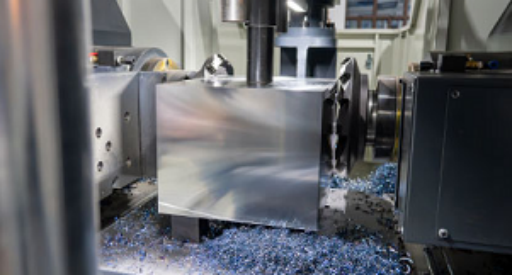
Now look at the newly installed duplex milling machine. Two 200 mm spindles face each other across the worktable. Press the start button and two face mills weighing 45 kg each begin turning together, the tachometer holding steady at 650 rpm. There is no need to crane up the 235 kg steel block and flip it over. The two cutters act like a pair of hands, gripping the 500 mm blank from both sides.
Twelve coated carbide inserts bite into the rough black scale at the same time, producing a deep, steady cutting sound. The 3000 N of lateral cutting force that used to push the block off line on a single-spindle machine now collides directly at the geometric center of the workpiece. With the forces balanced, the hydraulic fixture only needs 50 bar of pressure to hold the steel absolutely steady. The previous 0.02 mm physical bending deformation disappears completely, and surface flatness is forced into a tolerance band of 0.008 mm.
Lao Wang enters the target machining width of 400.00 mm on the control panel. Two precision ball screws, each 50 mm in diameter, begin turning and lock the distance between the two spindles to that exact value. The 8-ton Meehanite cast-iron bed sits solidly on its concrete foundation, absorbing all the vibration generated while removing 1.5 kg of metal chips per minute.
After the first base plate is cut and the tools retract, a caliper reads 400.01 mm at one end and 400.00 mm at the other. By the afternoon, when the 240th base plate comes off the chip conveyor, the digital display still reads 400.01 mm. Even after six straight hours of operation, the spindle housing temperature is only 34°C because the internal oil-cooling circuit removes 90% of the heat.
Dimensional accuracy no longer depends on the operator’s feel with a hammer. It depends on the fixed physical gap between the two milling cutters.
| Production Batch (45 Steel Blanks) | Clamping Method & Quantity | Total Cutting Stroke | Dimensional Deviation Range |
| Traditional single-spindle equipment | One part per setup (1 pc) | 500 mm | 0.02–0.05 mm |
| New duplex opposed milling | 6 parts lined up longitudinally | 3100 mm | 0.005–0.01 mm |
The built-in 3.2-meter worktable completely changes stock preparation in the workshop. Lao Wang lifts 6 square steel blanks, each 480 mm long, from a wooden pallet and places them end to end on a 600 mm-wide electromagnetic chuck. A hydraulic side pusher at 70 bar slams them into a perfectly straight line. Clamping all 6 parts takes just 3 minutes and 20 seconds.
The X-axis servo motor then drives the worktable forward at 180 mm per minute, carrying all 6 blanks through the two cutter heads like a train passing through a station. Coolant nozzles blast the machining zone at 50 liters per minute, washing thousand-degree chips into the collection trough below. While the machine cuts through this 3-meter-long line of steel, Lao Wang has a full 16 minutes free to clean up the 18 finished parts already completed next to it.
The old repetitive cycle of loading one part at a time has been completely broken. One stroke now produces 6 qualified parts with two-sided surface roughness reaching Ra1.6. The mountain of 70 tons of rough blanks in the corner of the shop visibly shrinks, turning into neat silver stacks.
In the past, there was always a sweating operator standing beside the machine clutching a long wrench, ready to tighten or loosen M24 nuts. Now Lao Wang can actually sit on a folding chair by the electrical cabinet and watch the spindle load stabilize at 65% on the screen. No more checking reference surfaces, no more flipping and re-leveling, no more hauling 20 kg clamping plates back and forth. Physical labor has been reduced to just a few seconds of loading and unloading.
The urgent order for 300 parts is fully machined by 4:00 p.m. on the third day shift, and not even a 0.1 mm scrap chip can be found at the bottom of the reject bin.
The supervisor from the deep-hole drilling shop comes over to inspect the parts and measures part No. 128 three times with a caliper. Parallelism error is still under 0.01 mm. The 12 mm carbide drill will no longer snap deep inside the hole from one-sided overload. And the operator in the precision grinding shop next door clocks out on time at 5:30 p.m. for the first time in ages, because no distorted parts with bulged bottoms are waiting for rework.