

Surface polishing is a crucial finishing process in mold manufacturing, directly impacting the quality of the final product. Whether it's injection molds, die-casting molds, or precision mold machining, the surface condition of the mold cavity directly reflects on the product surface. High-quality mold polishing not only improves product appearance but also reduces production defects and increases production efficiency. Improper mold surface treatment can lead to surface scratches, flow marks, and other problems, thus reducing product quality. This article will analyze how mold polishing affects product quality and why mold surface quality must be emphasized during mold manufacturing.
Improving Product Appearance Quality
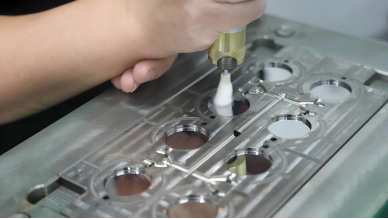
The most direct effect of polishing is to improve the surface quality of a product. The surface condition of the mold cavity is directly replicated on the injection-molded product. If there are tool marks, scratches, or pits on the mold surface, these defects will appear on the final product surface. High-quality injection mold polishing can achieve a smooth or even mirror-like finish, which is especially important for products such as automotive parts, electronic product housings, and transparent plastic parts.
Good polishing results in:
- A smoother surface
- Higher gloss
- Better appearance quality
These factors all enhance the product's competitiveness in the market.
Reducing Product Defects
Polishing mold surfaces can effectively reduce product defects. When the mold surface is rough, the flow of molten material in the cavity is hindered, easily leading to problems such as bubbles, flow marks, or incomplete filling. A smooth mold surface improves material flow, allowing the material to fill the cavity more evenly.
Proper polishing can reduce the following common defects:
- Flow marks
- Dents
- Surface scratches
- Porosity
This helps improve product consistency and reduce scrap rates.
Improving Demolding and Production Efficiency
Polishing also affects the product demolding process. A smooth mold surface reduces friction between the mold and the material, making it easier for the product to be ejected from the mold.
Therefore, companies can gain:
- Faster production cycles
- Lower defect rates
- Less mold maintenance
This is especially important for high-volume production.
Extending Mold Life
Mold polishing not only affects product quality but also extends the lifespan of the mold. Rough surfaces increase friction and wear, making them prone to cracking or corrosion over time. Polishing eliminates minor defects and improves surface wear resistance, thus extending mold life.
This helps businesses:
- Reduce maintenance costs
- Improve mold durability
- Maintain production stability

Summary
In conclusion, surface polishing is a crucial step in mold manufacturing. It directly impacts the product's appearance quality and significantly influences production efficiency and mold lifespan. A good polishing process effectively improves surface smoothness, reduces common surface defects, and promotes uniform material flow within the mold cavity.
Furthermore, proper polishing improves demolding performance, reduces resistance during production, thereby increasing production efficiency and lowering scrap rates. In addition, a smooth mold surface reduces wear, extends mold life, and lowers long-term production costs for companies.
Therefore, for manufacturing companies pursuing high-quality products and stable production, prioritizing mold polishing processes and controlling mold surface quality is essential.
To learn more about our solutions and services, please contact us for more information.