

Mold steel blank supplier selection directly affects finished part quality, procurement cost, and delivery schedule—this guide provides a comprehensive and directly actionable evaluation framework across three critical dimensions: steel grade quality verification, sawing service assessment, and supplier supporting capability confirmation. Drawing from real procurement dispute cases and on-site inspection experience, this guide helps procurement professionals and mold steel buyers identify genuinely reliable suppliers and systematically avoid the most common sourcing pitfalls that lead to quality incidents, delivery delays, and cost overruns.
Check Steel Quality
Steel Grade Match
Mold steel grade is the foundation of material performance—choosing the wrong grade means all subsequent machining and heat treatment parameters are mismatched from the very first step, ranging from premature part failure and early wear to entire batch scrapping, with losses often 5-10 times the material cost and potentially involving customer compensation claims.
Different mold steel grades vary significantly in hardness and toughness: pre-hardened steel (such as P20) has moderate hardness (30-33 HRC) and good machinability, suitable for injection molds and large plastic housings; cold-work steel (such as D2) has high hardness (55-62 HRC) and strong wear resistance, suitable for stamping high-strength steel plates and cold work tooling—the two require completely different sawing parameters, cutting speeds, and heat treatment processes, and mixing them is catastrophic with no room for correction after processing begins.
I once encountered a batch of materials in 2021 where the actual steel stamp did not match the ordered grade—on-site spectrometry quickly confirmed the grade deviation and the actual material was found to be an entirely different classification from what was ordered. The entire batch was immediately rejected and returned, the supplier covered all shipping and testing costs, and the buyer avoided the catastrophic risk of discovering the mismatch only after the materials had been processed into finished parts and delivered to customers.
The standard procedure for verifying steel grade upon receipt: first check the grade marking on the steel stamp or label, then compare it against the MTC material certificate—and the heat number must match the marking on the steel block itself; when necessary, use a spectrometer for on-site random sampling at a rate of no less than 10% of the batch—any discrepancy at any step requires immediate suspension of use and direct contact with the supplier to resolve before any processing begins.
Steel grade verification is the first step in mold steel procurement—when the steel stamp does not match the MTC, all materials must be rejected. Spectrometer sampling rate should be no less than 10%—spending more on inspection is far cheaper than processing wrong-grade materials into finished parts.
MTC Details
MTC (Material Test Certificate, also known as Material Test Report) is the core document proving the steel's chemical composition and mechanical properties—the heat number, chemical composition data, and hardness reading are the three essential elements of a valid certificate, and the heat number must match the steel block's own stamped marking, the chemical composition must conform precisely to the standard range for the corresponding grade (for example, P20 carbon content 0.28-0.40%), and the hardness reading must meet the specific requirements stated in the purchase order.
I once found during a 2023 goods inspection that the heat number on the MTC did not match the physical marking on the steel block—the supplier's explanation was a "clerical typing error"—which is completely unacceptable. The heat number is the sole traceable proof for identifying the steel's origin and smelting batch, and once it does not match, the entire batch's source becomes unverifiable, potentially involving smelting batch confusion, material substitution, or passing off inferior materials as superior ones.
MTC must clearly state the applicable international inspection standards: mold steel exports to US and European markets commonly reference ISO 10474 and EN 10204—and the core legal difference between them is who signs the certificate. EN 10204 3.1 certificates are signed by mill-authorized inspectors and carry legally binding force, while EN 10204 3.2 certificates are signed by independent third-party inspection agencies; supplier-prepared "material declarations" carry the lowest legal weight and are not accepted in formal export orders to regulated markets.
If a supplier cannot provide a clear and complete MTC (unclear content, missing heat number, or unsigned documents), demand an immediate written explanation and suspend use of the materials pending resolution—small suppliers commonly substitute simplified "material declarations" for formal EN 10204 certificates, which is explicitly not acceptable in export orders, and upon receiving any documents, always compare them against the physical steel blocks before accepting the goods.
Incomplete or missing MTC certificates are direct signals of insufficient supplier management capability—per EN 10204 standards, Type 3.1 certificates are signed by mill-authorized inspectors and Type 3.2 by independent inspection agencies; export orders typically only accept Type 3.1 or Type 3.2.
Real Stock
A supplier's claim of "in-stock availability" may have an actual delivery lead time of 2-4 weeks or more—the normal supply chain cycle for mold steel from smelting, rolling, normalizing, and sawing to final warehousing typically spans 8-12 weeks, and any inventory claimed to be available in a shorter timeframe must be especially verified for source authenticity to avoid purchasing rebranded steel, secondary-processed materials from unknown origins, or materials already locked by other customers.
I typically require suppliers to provide on-site inventory videos clearly showing steel pile date labels, or conduct physical on-site inventory checks while inquiring specifically about the procurement batch time of the stocked materials. In one instance, a supplier sent warehouse photographs that appeared to show ample and well-organized stock, but on-site verification revealed that the majority of steel blocks had been pre-locked by other customers, with actual available inventory falling below 20% of the claimed amount—a costly lesson in always verifying before committing.
Three standard verification actions for confirming true inventory authenticity: request on-site inventory videos clearly showing steel pile date labels; conduct physical inventory on-site while inquiring about procurement batch dates; for imported branded materials, independently verify customs clearance records and port entry documentation, and for domestic materials, confirm direct mill supply contracts and mill delivery records. Missing any one of these three items should be treated as a definitive red flag for questionable inventory integrity.
Normal supplier inventory levels are characterized by annual procurement volumes of 200-500 tons with inventory turnover of 4-6 times per year; turnover below 3 times per year strongly suggests false inventory reporting, while turnover above 7 times per year typically reflects chronic delivery scheduling conflicts. Both types of suppliers warrant extra caution during evaluation, and trial orders of 10-20 pieces with verified delivery times are the most reliable method for confirming actual inventory and scheduling capability before committing to larger volumes.
The normal mold steel inventory cycle is 8-12 weeks—any "in-stock" availability claimed in a shorter timeframe should be questioned, as it may involve rebranded materials or pre-locked inventory belonging to other customers.
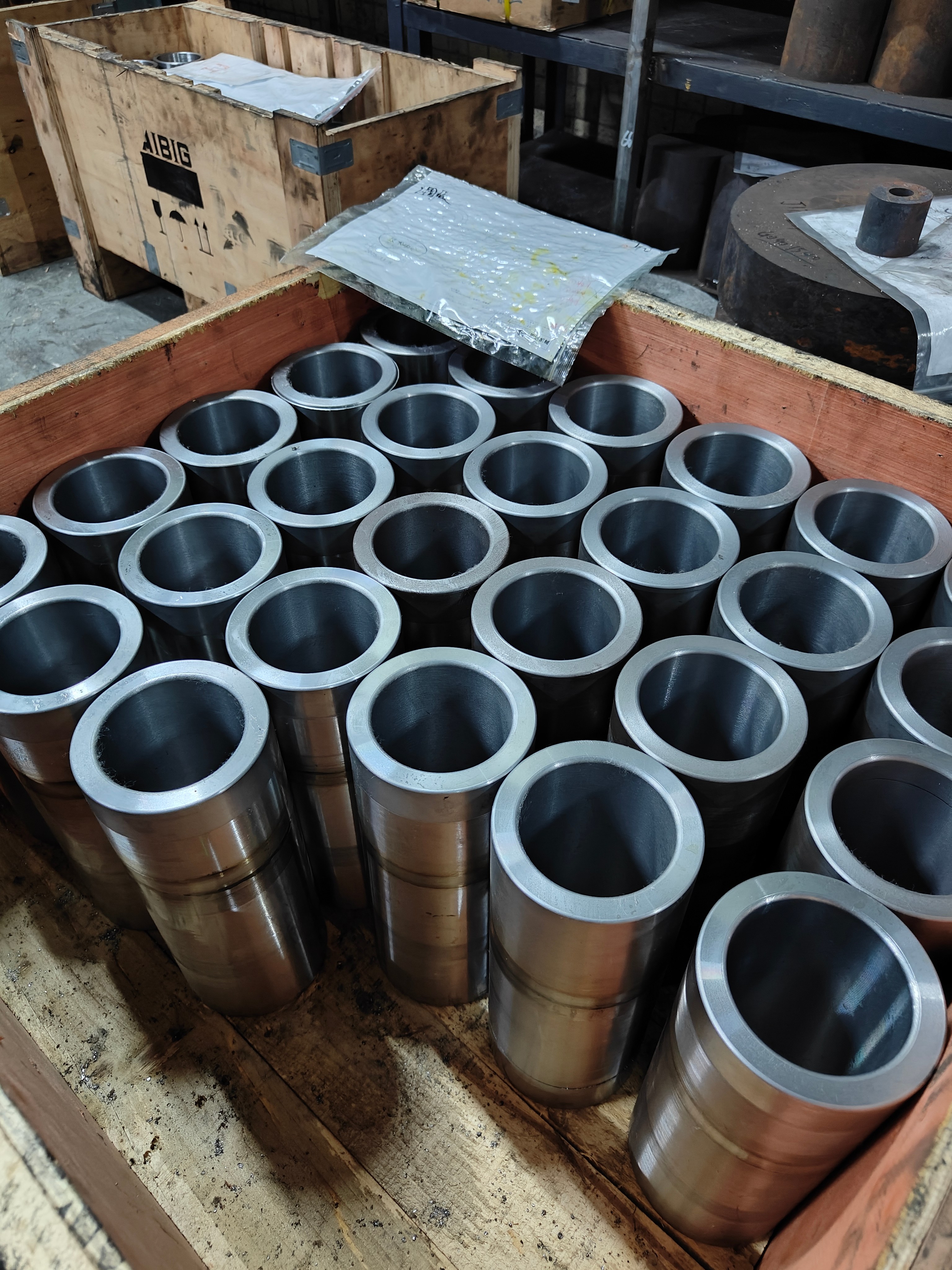
Review Cutting Service
Cutting Accuracy
Sawing accuracy directly affects the machining allowance of subsequent milling and grinding processes and ultimately determines material utilization rate and per-piece cost—CNC band saw precision is approximately 2-3 times higher than ordinary circular saws, and choosing the wrong equipment type means the extra machining allowance per piece increases by 0.3-0.5mm, translating to material cost increases of 3-5% per piece, and calculating based on 500 tons of annual procurement, the cumulative extra machining cost from insufficient sawing accuracy can reach tens of thousands of yuan per year.
Different steel grades have significantly different requirements for sawing accuracy: high-hardness cold-work steel (such as D2 at 55-62 HRC) must absolutely use CNC band saws, because circular saws cutting high-hardness materials at high feed rates tend to produce micro-cracks along the cut surface—these micro-cracks are often invisible to the naked eye but can cause edge chipping during subsequent milling. I personally witnessed in 2021 a case where circular saw cutting of D2 material resulted in edge chipping that required the entire piece to be scrapped, with repair and rework costs exceeding 3 times the original material cost, and prevention through correct equipment selection is always far better than expensive remediation.
Surface roughness (Ra value) is a direct extension of sawing accuracy: band saw cuts typically achieve Ra 0.8-1.6 micrometers with a smooth surface, while circular saw cuts typically show Ra 1.6-3.2 micrometers with a rough surface. Each roughness level increase adds approximately 0.3-0.5mm of extra machining allowance during subsequent milling, translating to 1.5-2.5 yuan additional cost per piece based on current material unit prices, and in severe cases with cumulative wear, the machining allowance per piece can exceed 1mm.
When selecting sawing equipment, always inform the supplier of the required tolerance grade for the final application and ask them to recommend the appropriate equipment type; contracts should explicitly specify sawing tolerance allowance (such as no greater than 0.10mm) and surface roughness upper limits (such as Ra no greater than 1.6 micrometers), and use calipers and roughness gauges for actual measurement verification upon acceptance—verbal agreements carry no legal weight, and written contractual specifications are the only effective protection.
Each accuracy grade improvement in sawing reduces machining allowance by 0.3-0.5mm—based on 500 tons of annual procurement, accuracy improvement can reduce material waste cost by tens of thousands of yuan per year, delivering far better value than purchasing low-price blanks and bearing the machining loss yourself.
Fast Delivery
Per-piece sawing time varies by equipment type: CNC band saw typically requires 25-40 seconds per piece, while high-speed circular saw can complete a cut in 8-15 seconds—but the premise of high-speed sawing is absolutely no queuing or scheduling conflicts, and actual delivery lead time depends entirely on the supplier's current workshop production schedule rather than theoretical equipment speed alone. When inquiring about equipment processing speed, one must simultaneously confirm the current order queue status and whether there are other orders ahead that would delay production.
The critical factor for urgent orders is confirming whether the supplier has dedicated scheduling channels for priority production rather than unified queue-based scheduling: for buyers with monthly order volumes averaging 500 pieces or more, it is strongly recommended to sign annual framework agreements that explicitly lock in guaranteed scheduling slots. I personally assisted a Dongguan-based mold factory in negotiating such a framework agreement, which compressed their average delivery time from 18 calendar days to 9 calendar days—a 50% reduction—and simultaneously improved their inventory turnover rate by 50%, delivering tangible operational benefits.
The most reliable method for verifying true delivery capability is to place a trial order of 10-20 pieces with explicitly agreed delivery date nodes and observe whether the supplier delivers on time. Verbal delivery promises carry no legal weight and are unreliable, and only written agreements with clear date commitments plus agreed-upon penalty clauses for delays provide genuine protection. If delivery is delayed by more than 3 working days beyond the agreed date, the buyer should immediately activate backup supplier options without waiting.
When negotiating framework agreements, the following three provisions are absolutely essential and non-negotiable: scheduling response time (for example, supplier must confirm feasibility within 2 hours of receiving an order), maximum queuing batch size per period (for example, no more than 100 pieces per scheduling window), and overdue penalty ratios (for example, daily compensation of 0.5% of the contract value). These three provisions form the standard minimum for securing delivery commitments, and during contract negotiations, use the delivery performance results from trial orders as leverage to secure more favorable scheduling priority.
Clean Edges
The two core quality indicators of a sawed section are burr height and heat-affected zone (HAZ): band saw cuts produce small burrs (typically 0.1-0.2mm) and a narrow HAZ (approximately 5-15 micrometers), while circular saw cuts produce larger burrs (typically 0.2-0.5mm) and a significantly wider HAZ (approximately 30-50 micrometers). Excessive HAZ directly compromises the structural integrity of the heat-affected zone, which severely affects subsequent welding quality and heat treatment outcomes, and in the most serious cases leads to weld seam cracking and complete part scrapping.
My standard procedure for inspecting sawed section quality upon receipt: first, visually examine the cut surface for periodic impact marks—regularly spaced marks indicate circular saw characteristics while smooth surfaces indicate band saw; second, use a right-angle ruler to verify section perpendicularity; third, use calipers to measure actual burr height. For high-hardness cold-work steel grades (such as D2), a 10x magnifying glass must be used to inspect for micro-cracks along the cut surface—these micro-cracks are completely invisible to the naked eye yet are sufficient to cause edge chipping during subsequent milling or polishing, making 100% magnification inspection mandatory for high-hardness materials.
New saw blades versus blades at 20% of their remaining service life produce burr heights that differ by a factor of 3-5 times—asking the supplier for saw blade replacement records and the current blade's total operating hours is an effective and low-cost method for judging cut stability. Contracts should explicitly specify maximum acceptable burr height (for example, no greater than 0.2mm) to provide verifiable acceptance criteria and written grounds for rejection if exceeded.
For high-hardness steel grade acceptance, special attention must be paid to micro-crack inspection: when circular saws cut high-hardness steel at excessive feed rates, micro-structural cracks appear on the section surface that are only visible under a magnifying glass. These micro-cracks cannot be eliminated or repaired through any subsequent heat treatment and can only result in complete part scrapping after detection—prevention through correct equipment selection and strict feed rate control is always superior to and far less costly than detection and scrapping after the fact.
D2 and similar high-hardness cold-work steel must be inspected with a 10x magnifier after sawing—micro-cracks invisible to the naked eye are sufficient to cause subsequent edge chipping, and magnifier inspection is the last line of defense against batch scrapping.
Ask Support Details
Machining Help
Mold steel arriving at a manufacturing facility typically cannot be used directly for final part production and must undergo at least 2 preliminary machining processes (sawing plus milling, or sawing plus grinding)—the supplier's supporting deep-processing capability directly determines final part precision, surface quality, and overall procurement cost. Choosing a supplier that only provides rough blanks without any machining support means the buyer assumes full responsibility for all subsequent precision risks, scheduling delays, and quality control costs.
Heat treatment is the most error-prone and consequential link in the entire mold steel processing chain: high-hardness steel grades must undergo full austenitizing at high temperature (typically 1020-1050 degrees Celsius), rapid quenching, and subsequent tempering to achieve the target hardness range—and the total deformation during this process can reach 0.3-0.8mm depending on the steel grade and furnace conditions. Deformation exceeding tolerance requires precision grinding for correction, with grinding costs typically running 15-25% of the original material cost, and choosing a heat treatment supplier without certified process capability means the direct and unavoidable extra cost is precisely this grinding correction expense.
Wire cutting (EDM Wire Cut), surface grinding, and CNC milling are the three standard deep-processing configurations for mold steel, and mold steel procurement contracts should clearly specify the processing scope and guaranteed precision for each process. Buyers have the right to require suppliers to provide actual processed sample photographs and measured dimensional reports, and the three key precision indicators to focus on are: flatness (no greater than 0.05mm per 100mm), parallelism (no greater than 0.03mm per 100mm), and dimensional tolerance (conforming to the drawing-specified IT grade).
An often-overlooked benefit of choosing suppliers with integrated deep-processing capability is that all responsibility for sawing, heat treatment, and precision machining is concentrated within a single supply chain system, which means clear accountability and no mutual finger-pointing among multiple parties when quality issues arise. When problems occur, the buyer deals with one responsible party rather than being told by the machining shop that the heat treatment was wrong, while the heat treater claims the steel grade was wrong, and the steel supplier claims the machining was wrong—this integrated responsibility structure can reduce traceability investigation time and problem resolution cycles by more than 50%.
When mold steel deep processing (wire cutting, grinding, heat treatment) responsibility is concentrated within a single supplier system, quality traceability and resolution cycles are reduced by more than 50%—dispersed procurement may appear cheaper per unit, but communication costs and delay risks during problem resolution far exceed the price difference.
Clear Pricing
The comprehensive quotation for mold steel contains hidden fees that typically account for 15-30% of the true total cost—these fees include material unit price, sawing charges (per cut or per piece), processing fees for milling, grinding, and heat treatment, and these are frequently presented as separate line items. Comparing only the material unit price is the most common procurement trap in the mold steel industry, because seemingly low material prices are often accompanied by high processing charges and miscellaneous fees that make the comprehensive cost substantially higher. Additionally, export orders must also account for freight costs, applicable import tariffs, and third-party inspection certificate fees, which are frequently omitted from initial quotations.
I personally compared quotations from two competing suppliers in 2022: Supplier A quoted a material price that was 12% lower than Supplier B, but their sawing fee was charged "per cut" without any specification of the maximum number of cuts allowed per piece; Supplier B quoted a slightly higher material price but their sawing fee was clearly itemized per piece. Upon comprehensive cost analysis including all processing stages, Supplier A's total cost ended up being 23% higher than Supplier B—this case illustrates how low-price initial attraction frequently leads to high-price settlement later, and this quotation strategy is the most common procurement trap used by suppliers.
Buyers should require suppliers to provide fully itemized quotations covering all of the following: material unit price (per kilogram or per piece), sawing unit price per cut, machining fees for each process (milling, grinding), heat treatment fees, third-party inspection certificate fees, and packaging and shipping costs. I recommend requesting a sample quotation first before committing to large orders, and any missing line items must be specifically inquired about and any vague items must be clarified to specific numerical terms. For buyers with monthly order volumes averaging 500 pieces or more, it is strongly recommended to negotiate annual framework agreements that lock in unit prices for all line items, preventing mid-year price increases that erode savings.
The transparency level of a supplier's comprehensive quotation directly reflects their overall management quality and business integrity. Suppliers who can provide clearly itemized and fully transparent quotations are typically more standardized in their contract performance, quality management systems, and problem resolution processes. Conversely, suppliers who provide vague or incomplete quotations with unclear fee structures are statistically more likely to encounter communication difficulties and unresponsiveness when quality disputes arise, and procurement professionals should treat quotation vagueness as a definitive high-risk warning signal warranting extra caution during supplier selection.
Problem Handling
Applicable international standards (including EN 10204:2004) stipulate that buyers may formally raise quality objections within 30 calendar days following receipt of goods—mold steel quality issues are typically categorized into three types: hardness below specified standard, steel grade non-compliance with order requirements, and dimensional measurements exceeding tolerance limits. Each category requires different handling procedures, but all three share the same fundamental principles: immediately preserve physical evidence, provide prompt feedback to the supplier, and confirm all communications in written form rather than relying on phone calls or messages.
When hardness is found to be below the specified standard upon testing, the buyer must immediately request third-party laboratory re-inspection using standardized methods (such as ISO 18265 or ASTM E18). If the third-party inspection report confirms the hardness deviation, the supplier bears full legal and financial responsibility for goods rejection, price reduction, or compensation—I personally handled a D2 steel hardness complaint case in 2023 where the third-party report confirmed substandard hardness, and ultimately the supplier bore all rework and replacement costs including logistics. Third-party re-inspection fees typically range from 200-500 USD per test, and purchase contracts must explicitly state that these fees are borne by the breaching party if the deviation is confirmed.
Steel grade non-compliance is the most serious quality issue because it potentially involves intentional fraud or material substitution—upon discovering grade non-compliance, the buyer must immediately cease all use of the affected materials, physically seal and retain the questionable samples, and issue a formal written objection notice to the supplier without delay. When necessary, engage an accredited third-party materials testing laboratory to conduct full chemical composition and metallurgical identification, with all identification fees the legal responsibility of the supplier if non-compliance is confirmed.
When evaluating and selecting suppliers, those who provide written explanations of causes and specific resolution plans within 48 hours of receiving an objection are demonstrably more reliable than suppliers who deflect responsibility, request delayed communication, or require receipt of goods before discussing issues. Purchase contracts must explicitly specify: objection response time limits (for example, written acknowledgment within 24 hours), resolution plan submission time limits (for example, specific resolution plan within 5 working days), and breach liability provisions (clear definitions of return, price reduction, or compensation obligations). These contractual provisions are the buyer's most fundamental legal protections and should never be omitted or weakened during contract negotiations.
Objections may be raised within 30 days after receipt—hardness complaints require third-party re-inspection (costs borne by the responsible party), and grade non-compliance involves fraud risk requiring immediate sample sealing and written objection notice; these two provisions are the buyer's fundamental legal protections.
Synthesizing the evaluation logic across all three dimensions: prioritize suppliers who can simultaneously provide MTC certificates, CNC sawing capability, integrated deep processing, and heat treatment coordination—these suppliers typically maintain annual mold steel supply scales of 500 tons or more with relatively complete quality management systems, and their comprehensive cost is often lower than low-price blank suppliers who provide no additional services.