

For a large mold-base machining shop, choosing a CNC controller affects far more than the brand name shown on the operator panel. It affects programming habits, CAM post-processors, operator training, service channels, spare parts, machine acceptance, troubleshooting speed, and maintenance cost for the next 5-10 years.
A CNC controller is not only the screen that displays the program. In a mold shop, it coordinates the NC program, servo motion, spindle behavior, PLC logic, tool changer, probing cycle, compensation function, alarm system, safety logic, and operator workflow. When the work involves long programs, deep cavities, high-speed finishing, 3+2 machining, simultaneous 5-axis machining, or large mold structures, the controller ecosystem becomes part of the production method, not just an electrical component.
FANUC, Siemens, and Mitsubishi Electric are three important CNC controller ecosystems in mold machining. They are not interchangeable just because all of them can run milling machines. Their HMI logic, parameter structure, commissioning workflow, service network, software options, high-speed machining functions, 5-axis support, and post-processing habits are different.
For a mold manufacturer, the best controller is not always the most expensive one. The right choice depends on job mix, customer structure, machine type, local service capability, operator base, CAM workflow, and the machine builder's integration experience. A controller that is excellent for a European automotive 5-axis mold line may be unnecessary for a shop that mainly machines mold bases, plates, holes, and standard 3-axis cavities.
FANUC is usually the safest mainstream choice for general mold bases, batch production, and shops that value easy hiring and predictable maintenance. Siemens is strongest when the machine must support high-end 5-axis work, automation integration, and European-facing production workflows. Mitsubishi Electric is attractive when the shop needs a practical balance of cost, performance, and Asian service support.
| Controller brand | Best fit | Main strength | Main risk |
|---|---|---|---|
| FANUC | General molds, mold bases, batch production, stability-first shops | Large installed base, familiar G-code workflow, strong parts and service ecosystem | Demanding 5-axis work may require the correct high-end model, advanced functions, and careful machine-builder integration |
| Siemens | Automotive skin molds, precision plastics, complex 5-axis work, European-facing projects | Strong high-end machining ecosystem, ShopMill/ShopTurn workflow, mature automation and digital-engineering integration | Higher learning curve and stronger dependence on Siemens-specific workflow; new projects should consider SINUMERIK ONE rather than treating 840D sl as the default new-build reference |
| Mitsubishi Electric | Mid-volume batch work, cost-sensitive shops, Japanese-funded or Asia-Pacific supply chains | Good balance of performance and cost, strong CNC/servo integration, practical high-speed machining functions | Service convenience depends on region, machine builder, distributor capability, and spare-parts path |
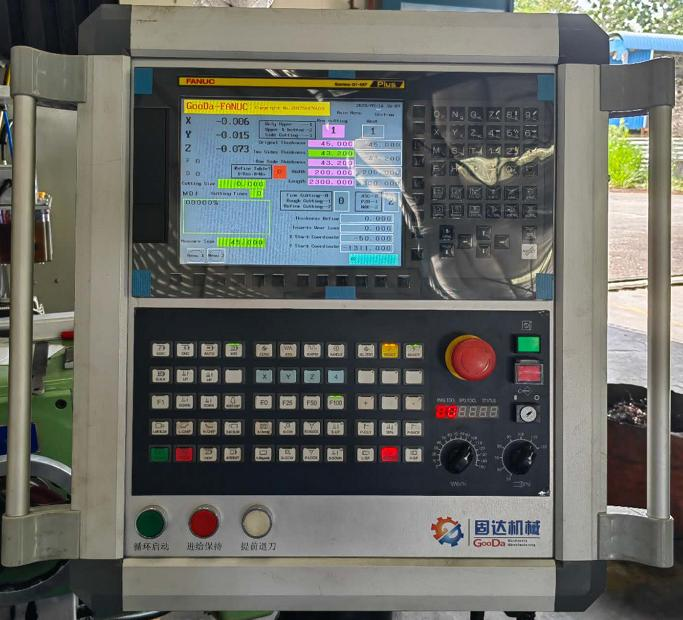
Before comparing brands, a mold shop should first define the real machining scenario. Mold-base machining usually emphasizes drilling, tapping, boring, facing, roughing, stable tool change, and predictable uptime. Core and cavity machining emphasizes surface quality, long-program execution, smooth interpolation, and high-speed finishing. Automotive skin molds and complex precision molds may require 5-axis kinematics, RTCP or TCP functions, probing, compensation, and validated CAM post-processors. These applications do not place the same demand on the CNC controller.
| Mold-shop application | What matters most | Controller selection implication |
|---|---|---|
| Mold base machining | Stable drilling, tapping, boring, face milling, easy operator transfer, fast recovery after faults | FANUC or Mitsubishi Electric is often practical when local support and machine-builder integration are strong |
| General core and cavity machining | Long program handling, high-speed finishing, surface quality, reliable CAM post-processing | FANUC, Siemens, or Mitsubishi Electric can all work, but the machine configuration and post-processor must be verified |
| Automotive skin molds | Large freeform surfaces, surface continuity, 5-axis workflow, customer acceptance, inspection method | Siemens is often easier to justify, especially when the customer or machine builder already uses a Siemens-centered workflow |
| Precision plastic molds | Dimensional stability, fine finishing, repeatability, toolpath smoothness, thermal control | Controller choice must be matched with machine rigidity, spindle quality, compensation, probing, and CAM strategy |
| Large gantry mold machining | Long-span accuracy, thermal compensation, linear scales, foundation quality, servo tuning | The controller is only one part of the accuracy system; the complete machine package matters more than brand name alone |
FANUC
Large Installed Base
FANUC remains one of the most widely used CNC controller ecosystems in machine tools. FANUC reported that cumulative production of its CNC systems reached 5 million units in February 2022.[1]
In China and many Asia-Pacific mold shops, FANUC is common on vertical machining centers, horizontal machining centers, gantry mills, boring mills, and mold-base roughing equipment. A large installed base helps operators, maintenance technicians, CAM programmers, and machine-tool service engineers reuse knowledge across machines.
The practical value of a large installed base is not abstract. It means a shop is more likely to find operators who already understand FANUC-style offsets, alarms, macro habits, program editing, and recovery procedures. It also means common CAM systems usually have mature FANUC-style post-processor templates. For a production shop that runs many machines every day, this reduces onboarding time, lowers training risk, and makes emergency troubleshooting easier.
| FANUC model | Typical mold-shop use | Practical note |
|---|---|---|
| 0i-MF / 0i-MF Plus | General milling, mold base machining, 3-axis and basic 4-axis work | FANUC positions the 0i-MF Plus as part of its 0i-F Plus CNC platform for milling applications, with functions aimed at high machining quality and productivity.[2] |
| 31i-B / 31i-B Plus | Higher-end machining centers, multi-axis machines, larger machine platforms | The 31i-B Plus is a high-end FANUC model for high-grade machining centers, but it is not the same as a dedicated simultaneous 5-axis model.[3] |
| 31i-B5 / 31i-B5 Plus | Simultaneous 5-axis machining centers and complex surface work | FANUC describes the 31i-B5 Plus as a model with simultaneous 5-axis machining capability for complex shapes at high speed, high accuracy, and high quality.[3] |
| 30i/31i/32i-B Plus family | Complex multi-axis and high-end machining | The 30i-B Plus supports a much larger number of controllable axes and paths, making it more suitable for advanced multi-axis machine tools.[3] |
For standard mold-base work, FANUC's practical advantage is not one single parameter. It is the combination of familiar alarm handling, common post-processors, easy operator transfer, broad maintenance experience, and easier production recovery when a machine stops unexpectedly.
- The large installed base keeps the used-parts and repair ecosystem active.
- FANUC-style offsets, alarms, macros, and G-code habits are familiar to many machinists and service engineers.
- For a WJ-800 horizontal machining center running FANUC 0i-MF, this support density is a practical advantage in mid-tier mold production.
However, a buyer should not ask only whether a machine uses FANUC. The more important questions are which FANUC series is installed, which machining options are included, whether the machine supports the required number of simultaneous axes, whether the high-speed machining functions are active, and whether the machine builder has already verified the CAM post-processor for the exact machine structure.
For long-span vertical mills and gantry machines, positioning accuracy should not be attributed to the controller alone. A 0.01 mm-level positioning target over a large travel depends on the machine structure, linear scales, screw or rack system, servo tuning, thermal compensation, foundation quality, and measurement method. FANUC can be part of that solution, but the final result is determined by the complete machine package.
Stability and Reliability
FANUC's strongest reputation is stability, familiarity, and low surprise cost.
FANUC promotes high reliability for its CNC systems in 5-axis machining applications, including a published claim of up to 52 years MTBF for FANUC CNC systems.[4]
That claim should not be treated as a direct guarantee of shop-level uptime. MTBF is a statistical reliability indicator for the CNC system, not a promise that the complete machine tool will operate for that many years without failure.
Actual machine uptime depends on the complete machine tool, electrical cabinet design, cabinet cooling, dust and oil-mist control, power quality, maintenance habits, and the machine builder's integration quality.
| Reliability factor | Practical reading |
|---|---|
| Controller hardware | FANUC is widely regarded as conservative and robust, especially in standard milling and machining-center applications. |
| Machine builder integration | A good controller cannot compensate for poor wiring, weak cabinet cooling, incorrect grounding, poor lubrication, or poor servo tuning. |
| Maintenance ecosystem | FANUC's common alarm and parameter habits make third-party troubleshooting easier in many regions. |
| Downtime risk | The more standard the controller and machine configuration, the easier it is to restore production after common faults. |
In heavy mold machining, the practical value of FANUC is not only controller reliability. It is the combination of controller stability, technician familiarity, spare-parts availability, post-processor reuse, parameter backup, and the ability to bring a stopped machine back into production quickly.
For purchasing teams, reliability should be evaluated as a recovery question, not only as a hardware question. Before ordering a FANUC-controlled machine, the buyer should confirm who provides first-line support, which spare parts are locally available, whether parameter backup is delivered with the machine, whether the machine builder can support remote diagnosis, and how quickly common parts such as drives, I/O boards, screens, and servo amplifiers can be replaced.
FANUC also has limits. It is not automatically the best answer for every 5-axis mold application. Complex 5-axis work requires the correct FANUC model, the correct software options, good rotary-axis geometry, mature machine-builder integration, and a validated CAM post. If a shop buys a standard FANUC package but expects high-end simultaneous 5-axis finishing without confirming these details, the result may disappoint even though the controller brand is strong.
Learning Resources and Operator Mobility
FANUC has broad CNC training resources. FANUC's CNC training products include CNC simulators, CNC GUIDE software, school-oriented education packages, curriculum support, and realistic programming environments for operators and programmers.[5]
| Controller | Typical learning curve in mold shops | Hiring impact |
|---|---|---|
| FANUC | Shortest when the shop already uses ISO-style G-code and mainstream CAM posts | Usually easiest to hire for in many Chinese and Asia-Pacific machining clusters |
| Siemens | Fast for operators already trained in ShopMill or ProgramGuide, longer for full system mastery | Talent is stronger in high-end plants, European-equipment shops, and foreign-funded factories |
| Mitsubishi Electric | Moderate; close enough to common CNC habits for standard milling, but parameters and service workflow differ | Stronger in Japanese-invested plants and Asia-Pacific supply chains |
For G-code work, FANUC-style posts are widely available in mainstream CAM workflows. This does not mean every FANUC post is plug-and-play. A safe production post still needs to match the machine kinematics, tool changer, spindle, probing system, coolant logic, safety logic, and customer macros.
In practice, a candidate with solid FANUC experience can usually adapt quickly to another FANUC-controlled mold shop. That portability reduces onboarding time and lowers production risk when operators change jobs.
For a shop that plans to expand from a few machines to a larger machining department, this operator mobility can become a strategic advantage. A unified FANUC environment can make it easier to standardize training, alarm handling, parameter backup, program transfer, fixture habits, and maintenance procedures across multiple machines.
Siemens
ShopMill and Siemens Programming Workflow
Siemens's strength is not only the CNC hardware. It is the workflow around SINUMERIK Operate, ShopMill/ShopTurn, ProgramGuide, PLC integration, HMI integration, simulation, automation, and digital engineering. Siemens describes SINUMERIK as supporting flexible CNC programming from ShopMill/ShopTurn machining-step programming to G-code programming with high-level languages.[6]
| ShopMill item | Practical effect |
|---|---|
| 2.5D milling cycles | Fast setup for regular mold features, plates, pockets, shoulders, and simple contours |
| Drilling cycles | Efficient programming for hole patterns, tapped holes, and repeated mold-base features |
| Thread milling and pocket cycles | Less manual G-code writing for common shop-floor edits |
| 3+2 positioning workflow | Easier for operators who do angled features but do not write full simultaneous 5-axis programs by hand |
| Graphical operation | Helpful for new operators and for safe verification of simple shop-floor modifications |
For mold shops, ShopMill is useful when operators often create or adjust 2.5D features directly at the machine. It can shorten programming time for pockets, drilling, tapping, face milling, and simple angled work. For complex freeform mold surfaces, the main program will still usually come from CAM, not manual shop-floor programming.
This distinction is important. ShopMill can make everyday shop-floor programming easier, but it is not the main reason Siemens is selected for high-end mold machining. Siemens becomes easier to justify when the controller is part of a larger production system that includes 5-axis kinematics, probing, safety logic, PLC/HMI integration, automation, simulation, and customer-specific acceptance requirements.
The downside is workflow lock-in. A ShopMill-trained operator may still need retraining when moving to a FANUC shop, especially if the new shop relies heavily on CAM output, macro logic, or manual G-code editing.
- Siemens is strong when the machine requires deep integration between CNC, PLC, HMI, drives, automation, probing, and safety.
- It is especially attractive when the customer, machine builder, or existing production line already uses a Siemens-centered workflow.
- It can be less attractive for a small shop that mostly does 2.5D mold-base work and has limited Siemens-trained labor.
For a small or mid-sized mold shop, Siemens should not be chosen only because it sounds more high-end. If the shop mainly performs drilling, tapping, facing, pocketing, roughing, and standard 3-axis cavity work, the extra learning curve and system cost may not create enough production value. If the shop depends on complex high-end work, however, the Siemens ecosystem can reduce engineering and acceptance risk.
5-Axis and High-End Machining
Siemens has a strong position in high-end 5-axis mold machining, especially where European machine tools, complex automation, digital engineering, and mature CAM post-processors are involved. For new high-end Siemens projects, SINUMERIK ONE should be considered alongside or ahead of legacy 840D sl references. Siemens positions SINUMERIK ONE as its leading-edge CNC system for highly productive machine tools, based on a multicore architecture.[7]
Siemens 840D sl still has a large installed base and a long field history. However, Siemens announced the product phase-out of SINUMERIK 840D sl, with product cancellation taking effect on 1 October 2024.
From that point, affected products can only be ordered and delivered as spare parts.[8] For a new machine purchase, the buyer should confirm the controller roadmap, spare-parts policy, software version, and long-term support plan with the machine builder.
For 5-axis mold machining, the buyer should separate three different concepts. 3-axis machining keeps the tool direction fixed while the X, Y, and Z axes move. 3+2 machining positions the rotary axes first and then performs 3-axis cutting at an angled orientation. Simultaneous 5-axis machining moves linear and rotary axes at the same time during cutting. These three applications require different levels of controller function, CAM post-processing, machine calibration, and operator skill.
| 5-axis factor | Siemens reading | FANUC comparison |
|---|---|---|
| RTCP and kinematics | Strong ecosystem for high-end 5-axis and complex machine kinematics | Also capable, especially with FANUC 31i-B5/31i-B5 Plus or high-end 30i/31i/32i configurations and correct integration |
| CAM/post chain | Very strong in European-facing mold, die, aerospace, and high-end machine-tool workflows | Very common globally, especially for general machining, production shops, and Asia-Pacific mold work |
| Training | Efficient for ShopMill/ShopTurn and ProgramGuide users, but full system mastery requires deeper system knowledge | Easier operator portability in many mainstream mold shops |
| Budget | Often higher once options, engineering, service, and training are included | Often lower entry cost for standard 3-axis, 4-axis, and many 3+2 applications |
For automotive skin molds, precision plastic molds, aerospace structural parts, and impellers, controller capability is only one part of 5-axis accuracy. The final result depends on rotary-axis geometry, thermal behavior, volumetric compensation, probing, calibration, CAM strategy, tool holding, spindle behavior, cutting conditions, and inspection method.
A practical selection rule is simple: if most work is 2.5D or 3-axis cavity machining, FANUC or Mitsubishi Electric may be enough. If a large share of revenue depends on complex 5-axis surfaces, customer-approved Siemens workflows, or European machine-tool standards, Siemens is easier to justify.
For new Siemens-controlled machines, the procurement team should avoid vague wording such as "Siemens high-end controller." The quotation should clearly state the SINUMERIK generation, software version, axis configuration, 5-axis options, probing support, simulation support, service responsibility, and future spare-parts path. For existing 840D sl machines, the decision can still be reasonable if the shop already has trained staff, known post-processors, and a clear support plan.
European-Facing Mold Work
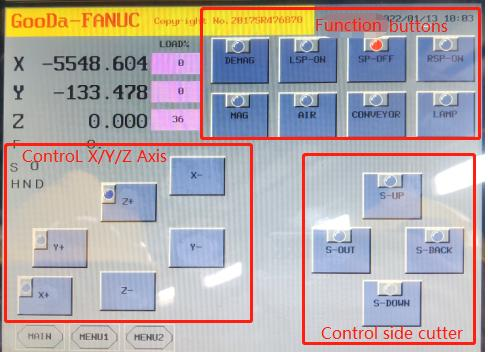
Siemens holds a strong position on many high-end European machine tools and production systems. Shops serving German, Italian, Swiss, or European automotive customers often benefit from Siemens familiarity in machine acceptance, post-processing, service communication, and automation integration.
| Market or customer type | Controller tendency | Reason |
|---|---|---|
| European automotive mold work | Often Siemens, sometimes Heidenhain or FANUC depending on machine builder | Customer acceptance, post-processing chain, and service habits may already be Siemens-centered |
| Asia-Pacific mold work | Often FANUC or Mitsubishi Electric | Operator pool, local service habits, and Japanese/Asian machine-tool supply chains are easier |
| China domestic Tier 1 automotive mold work | Mixed | Depends on customer ownership, machine brand, 5-axis demand, and purchasing standards |
If customers are mainly European or American mold-export accounts and they specify Siemens-based machine acceptance or post-processing, Siemens can reduce communication cost. If customers are mainly domestic or Asia-Pacific accounts and production is mostly standard mold-base or 3-axis cavity work, FANUC is often the safer mainstream choice.
European-facing workflow does not mean that every European customer requires Siemens. It means that customer standards, machine acceptance habits, CAM post-processors, service communication, and 5-axis verification methods may already be built around a certain control ecosystem. If the customer's accepted machine list or process documentation is Siemens-centered, choosing Siemens may reduce project risk even if another controller could theoretically machine the same part.
Siemens 808D should not be used as a direct price benchmark against Mitsubishi M80, FANUC 31i-class systems, or Siemens 840D sl/SINUMERIK ONE. Siemens describes SINUMERIK 808D ADVANCED as a panel-based CNC for the basic performance range, used for turning and milling applications.[9] It is useful in its own class, but it is not the right comparison point for high-end mold machining or complex 5-axis selection.
Mitsubishi Electric
Value and Practical Performance
Mitsubishi Electric CNC controllers are common in many Asia-Pacific machine-tool supply chains, especially where Japanese machine builders, Japanese-funded factories, and cost-sensitive production shops are involved.
Mitsubishi Electric Automation introduced the M800 and M80 controllers in the M8 Series CNC platform in North America in May 2016. The release describes the M800 as a high-grade CNC for high-speed, high-accuracy machining and multi-axis, multi-part system control, while the M80 is positioned for high productivity and easy operability.[10]
| Item | Mitsubishi Electric position | Practical meaning |
|---|---|---|
| M80 controller | Mid-to-upper machining-center applications | Good balance of usability, speed, and cost when the machine builder integrates it well |
| M800 controller | Higher-end Mitsubishi CNC platform | Better fit for more demanding multi-axis, multi-part, and high-accuracy applications |
| CNC-dedicated CPU | Mitsubishi describes the M8 Series as using a CNC-dedicated CPU designed for high throughput and complex machining applications.[10] | Supports faster processing and practical high-speed machining when the whole machine package is designed well |
| SSS-4G control | Mitsubishi describes SSS-4G as enabling high-speed, high-accuracy, high-quality machining and reducing machine vibration during high-speed cutting.[11] | Useful for mold finishing and semi-finishing where surface quality and cycle time both matter |
| Tool center point control | The M800/M80 catalog describes tool center point control support for a system with four simultaneous contour control axes in the M80 Series.[12] | This does not mean every M80-equipped machine is automatically suitable for full simultaneous 5-axis mold finishing; the actual axis count, kinematics, and software options must be confirmed before purchase |
Compared with Siemens high-end packages, Mitsubishi Electric is often attractive to shops that need practical high-speed machining features but do not need the full Siemens automation and high-end 5-axis ecosystem. Compared with FANUC, Mitsubishi Electric can be competitive when the local service chain is strong and the machine builder has mature Mitsubishi commissioning experience.
The key word is "complete package." Mitsubishi Electric can offer good value, but the buyer should compare the controller, servo system, software options, HMI configuration, training, spare parts, warranty, post-processor support, and machine-builder service as one system. A controller that looks cheaper on the quotation may not be cheaper if the shop later spends more time on training, troubleshooting, or post-processor adjustment.
Exact controller-package pricing varies by country, machine builder, axis count, drive package, software options, service terms, and exchange rate. A buyer should compare complete quotations, not only the controller name on the nameplate.
Mitsubishi Electric can be a stable choice when the machine structure, drive system, application, and local service path fit the controller. It should not be selected only because the controller package looks cheaper; the machine builder's Mitsubishi experience matters as much as the controller brand.
Mitsubishi Electric is especially worth considering for shops that serve Japanese-funded customers, Asian supply chains, mid-volume mold production, and cost-sensitive projects where the local distributor and machine builder already have strong Mitsubishi experience. It is less attractive when the local service path is unclear, the CAM post is untested, or the customer's acceptance standard is built around another controller ecosystem.
Asia-Pacific Service Fit
Mitsubishi Electric has a visible CNC support base across China and Asia-Pacific.
Its global CNC support page says Mitsubishi Electric has established FA Centers that manage service centers and service satellites in each area to improve service quality through engineer training and enhanced service-parts and repair facilities.[13]
For China and ASEAN/Oceania, the same support page lists regional CNC and FA service resources, with service scope depending on location, organization, product, and local support path.[13]
| Region | Mitsubishi Electric service fit | Controller choice note |
|---|---|---|
| South China | Generally practical in Japanese-funded and export-oriented manufacturing clusters | Good candidate when the machine builder and local service partner both support Mitsubishi well |
| East China | Generally practical around major manufacturing cities and listed service locations | Good fit for Japanese, Taiwanese, and joint-venture supply chains |
| North and West China | Must be checked city by city even though Mitsubishi lists regional service resources | FANUC may be safer if the local Mitsubishi CNC response path is weak for the exact machine model |
| Southeast Asia | Often familiar in Japanese machine-tool and parts-supplier networks | Mitsubishi Electric and FANUC are both common choices; local distributor strength matters more than brand reputation alone |
For a plant in South China, East China, Thailand, Vietnam, Malaysia, or Singapore, Mitsubishi Electric can be a practical choice if the local service path is clear. For a plant in a less-covered city, the buyer should confirm spare-parts stock, on-site response terms, remote-support language, and machine-builder responsibility before placing the order.
The same rule applies to all three brands: a strong controller with weak local service is risky; a slightly less advanced controller with strong local support may be the better production choice.
Service fit should be verified before the purchase, not after the machine arrives. The buyer should ask who will respond to the first fault, whether the machine builder or controller distributor owns the service responsibility, which spare parts are stocked locally, whether remote diagnosis is available, and whether the service engineer has experience with the same controller, drive system, and machine model.
CAM Post-Processor and Machine Integration
Many mold shops underestimate the CAM post-processor when comparing CNC controllers. A post-processor is not only a format converter. It translates CAM toolpaths into machine-specific NC code that must match the controller, axis structure, rotary-axis direction, tool changer, spindle logic, probing system, coolant commands, safety positions, and customer macros.
The same controller brand does not guarantee that one post-processor can be used safely on every machine. A FANUC-controlled vertical machining center, a FANUC-controlled horizontal machining center, and a FANUC-controlled 5-axis gantry machine may require different post-processors. The same rule applies to Siemens and Mitsubishi Electric machines.
| Post-processor check | Why it matters |
|---|---|
| Machine kinematics | Rotary-axis direction, pivot length, table/head structure, and RTCP behavior must match the real machine |
| Tool change and safety logic | Wrong retract, tool call, or safe position logic can create collision risk |
| Probing and compensation | Probe cycles, work offsets, and compensation functions must be supported by the controller and machine builder |
| High-speed machining options | Smoothing, look-ahead, tolerance, and contouring behavior affect surface quality and cycle time |
| Customer acceptance | Some customers may require a proven post, sample part, or acceptance program before mass production |
Before ordering a machine, the mold shop should ask whether a tested CAM post already exists for the exact controller and machine model. For 5-axis work, the buyer should request a sample program, simulation verification, dry-run procedure, and acceptance cutting test. This is especially important when the machine uses a less common axis structure or when the shop is moving from 3-axis to simultaneous 5-axis machining for the first time.
How to Choose
For mold shops, the right controller depends on the real production scenario, not the brand name.
- For general molds, batch production, mold bases, and stability-first operation, choose FANUC 0i-MF/0i-MF Plus or a higher FANUC 31i-class system when the machine requires it.
- For automotive skin molds, precision plastics, complex 5-axis simultaneous work, and European-facing customer workflows, choose Siemens SINUMERIK ONE for new projects, or 840D sl where the machine is already standardized and long-term support is clear.
- For mid-volume batch work, cost-sensitive projects, Japanese-funded customers, and Asia-Pacific supply chains, choose Mitsubishi Electric M80/M800-class systems when local service and machine-builder integration are strong.
| Scenario | Recommended controller direction | Reason |
|---|---|---|
| General molds and batch production | FANUC 0i-MF / 0i-MF Plus / 31i-class where needed | Mature ecosystem, easy hiring, common posts, strong service familiarity |
| Automotive skin and precision 5-axis work | Siemens SINUMERIK ONE or supported 840D sl installed base | Strong high-end machining, automation, and European-facing post-processing ecosystem |
| Cost-sensitive mid-volume mold production | Mitsubishi Electric M80/M800-class system | Good value when the local service network and machine-builder integration are strong |
Use three checks before choosing the controller.
- Check customer structure. If most orders are domestic or Asia-Pacific general mold work, FANUC or Mitsubishi Electric is usually safer. If a major share of revenue comes from European automotive or high-end 5-axis customers, Siemens is easier to justify.
- Check process complexity. If most work is 2.5D, drilling, tapping, roughing, and standard 3-axis mold work, do not overbuy a high-end 5-axis control package. If simultaneous 5-axis finishing is a revenue-critical process, do not underbuy the controller, machine structure, compensation system, or CAM workflow.
- Check budget and training resources. A controller that your operators, maintenance team, and CAM programmers already understand may produce more value than a more advanced system that the shop cannot support.
Operator mobility cost is often underestimated.
- FANUC operators usually transfer more easily between mainstream mold shops.
- Mitsubishi Electric operators usually need some retraining on parameters, HMI habits, and maintenance workflow.
- Siemens operators trained in ShopMill/ShopTurn or ProgramGuide may work very efficiently inside the Siemens ecosystem but may need more time when moving to a FANUC-style workflow.
The most common mistake is buying Siemens only because it looks more high-end when most of the shop's work is standard 2.5D mold-base machining. The opposite mistake is choosing a basic controller package for a shop that depends on demanding 5-axis customer acceptance.
Match the controller to your actual job mix, customer standards, local service network, and operator base.
A practical decision can be made by asking five questions before looking at the quotation price.
- What percentage of revenue comes from mold bases, 3-axis cavities, 3+2 work, and simultaneous 5-axis work?
- Which controller ecosystem is already familiar to the shop's operators, maintenance engineers, and CAM programmers?
- Does the customer specify or prefer a certain controller, machine brand, post-processor, or acceptance workflow?
- Can the local service team support the exact controller model, drive system, and machine configuration?
- Has the machine builder already delivered similar machines with the same controller and application?
| Buyer question | What to confirm before purchase |
|---|---|
| Exact controller configuration | Controller series, software version, axis count, simultaneous axis support, and active machining options |
| 5-axis capability | RTCP or TCP support, rotary-axis calibration, kinematics setting, compensation method, and acceptance test |
| CAM workflow | Validated post-processor, sample program, simulation result, dry-run method, and responsible party for post adjustment |
| Service and spare parts | Local engineer availability, parts stock, response time, warranty scope, and remote-support process |
| Training and handover | Operator training, maintenance training, parameter backup, alarm list, and recovery procedure |
FANUC is usually the lower-risk choice when the shop needs familiarity, stability, easy hiring, and a broad service ecosystem. Siemens is easier to justify when high-end 5-axis machining, automation, digital engineering, and European-facing workflows are part of the production requirement. Mitsubishi Electric can be the better value choice when Asian service support, machine-builder integration, and cost-performance balance are strong.
When a mold shop picks a controller, first define the next 3-5 years of customer structure and process complexity. Then choose the brand and configuration. If that order is right, most controller-selection problems disappear before the machine reaches the shop floor.
Manufacturer claims are useful for understanding product positioning, but the final decision should be validated through real machine configuration, local service capability, CAM post verification, sample cutting, and acceptance testing. The controller brand matters, but the complete production system matters more.