

S45C steel is one of the most widely used medium carbon steels in the machining and mold base industry. If you are sourcing steel blocks for CNC machining, fixture manufacturing, shafts, plates, or mold bases, chances are you have already seen the grade name “S45C”.
But many buyers still have the same questions:
· What exactly is S45C steel?
· Is S45C the same as 1045 steel?
· What hardness can S45C reach?
· Is it good for mold bases or heavy machining?
· How do you machine S45C efficiently without wasting inserts?
This article provides a complete and practical guide to S45C steel properties, real-world applications, and machining tips based on common shop-floor challenges.
1. What Is S45C Steel?
S45C is a Japanese Industrial Standard (JIS) grade of medium carbon steel. It is well-known for its balanced combination of:
· good machinability
· decent strength
· stable performance
· cost-effective pricing
Because of these advantages, S45C is widely used in general machining, mold base manufacturing, machine parts, and mechanical structures.
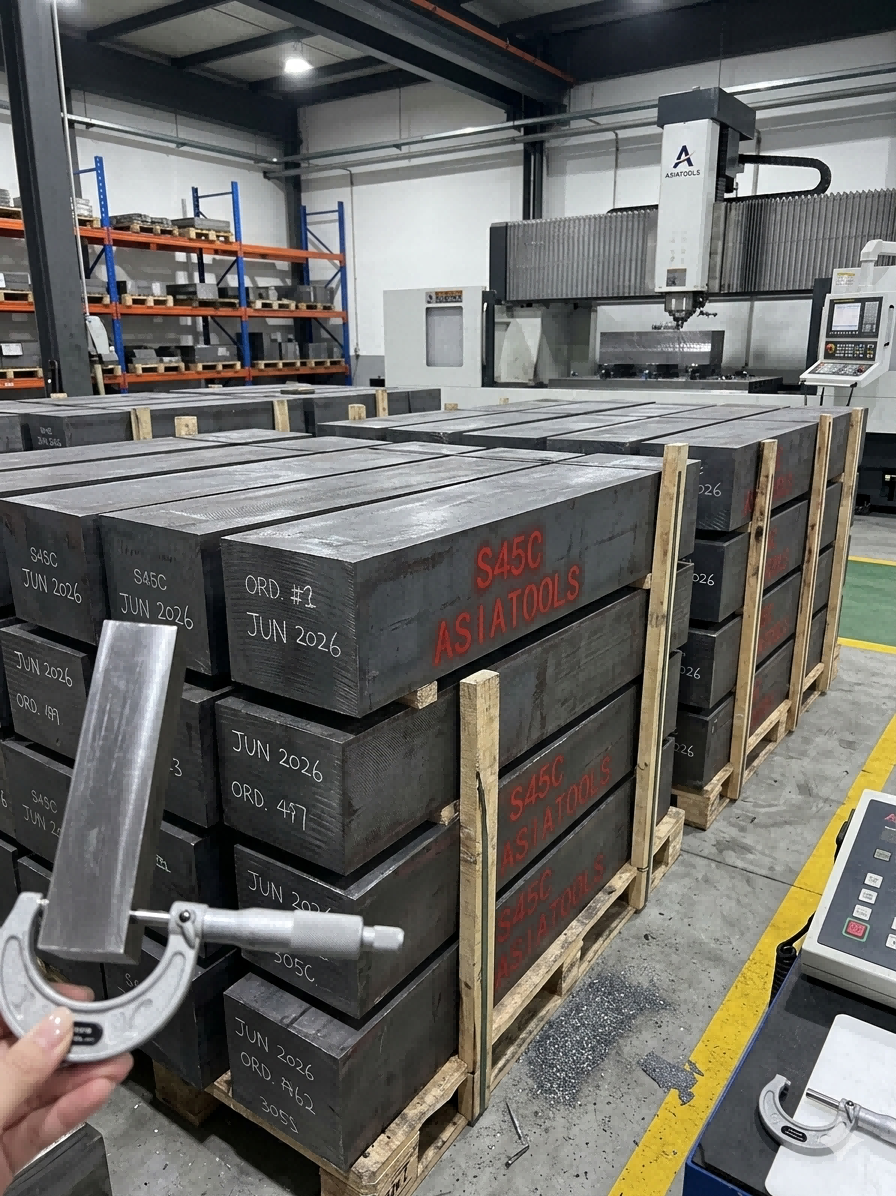
In many international markets, S45C is often purchased as a steel block for CNC milling, drilling, turning, and surface machining.
If your goal is to find a steel grade that is affordable but still reliable for machining, S45C is often the first choice.
Internal Link Suggestion:
If you are looking for ready-to-machine blocks, check our 45# Steel / S45C Steel Blocks
2. S45C Steel Equivalent Grades (S45C vs 1045)
One of the biggest advantages of S45C is that it has many international equivalents, which makes it easy for global buyers to source.
Here are the most common equivalents:
| Standard | Grade |
| JIS (Japan) | S45C |
| AISI/SAE (USA) | 1045 |
| DIN (Germany) | C45 / C45E |
| GB (China) | 45# |
| EN (Europe) | C45 |
Is S45C the same as 1045 steel?
In most practical machining applications, S45C is considered equivalent to AISI 1045.
The carbon content and mechanical performance are very close.
However, exact chemical ranges may vary slightly depending on mill production and standard tolerances. That is why buyers who require strict performance should always request a Mill Test Certificate (MTC).
3. S45C Steel Chemical Composition (Typical)
S45C steel is a medium carbon steel with typical carbon content around 0.42%–0.48%.
Typical composition range (reference):
· Carbon (C): ~0.42–0.48%
· Silicon (Si): ~0.15–0.35%
· Manganese (Mn): ~0.60–0.90%
· Phosphorus (P): ≤0.030%
· Sulfur (S): ≤0.035%
This composition allows S45C to achieve good strength while maintaining machinability.
4. S45C Steel Mechanical Properties
S45C is not an alloy tool steel. It is a medium carbon structural steel. That means it is not designed for extreme hardness like H13 or D2, but it performs very well in common machining and structural applications.
Typical mechanical performance:
· Good tensile strength after heat treatment
· Good fatigue resistance
· Better strength than low carbon steels such as S20C / 1020
· Stable machining performance
Because of its balanced performance, S45C is frequently used in parts requiring both machining and moderate strength.
5. S45C Steel Hardness Range (As-Supplied vs Heat Treated)
One of the most common buyer questions is:
“What hardness is S45C steel?”
The answer depends on the supply condition.
Common hardness ranges:
· As hot rolled / normalized: approx. HB 170–220
· Quenched and tempered: can reach HRC 20–30+ depending on treatment
· Induction hardened surface: surface hardness can be much higher (HRC 50+ possible)
For many machining factories, S45C is purchased in a normalized or pre-machined condition because it provides stable machining results.
If you need a more stable surface for CNC milling, we recommend choosing pre-machined blocks instead of black surface raw material.
Internal Link Suggestion:
For faster setup and reduced machining allowance, check our Machining Service.
6. Common Applications of S45C Steel
S45C steel is widely used across machining industries because it is cost-effective and easy to machine.
Typical applications include:
1) Mold bases and mold plates
S45C is commonly used as a mold base plate material, especially for:
· injection mold base structures
· die casting mold support plates
· backing plates
In many cases, mold makers use S45C for non-working mold components (not the cavity/core).
If the mold requires higher hardness and wear resistance, buyers often upgrade to tool steels like P20 or 718.
Internal Link Suggestion:
If you need higher performance mold steel, check P20 Mold Steel.
2) Shafts, gears, and mechanical parts
S45C is widely used for:
· shafts
· couplings
· gear components
· machine brackets
· bearing supports
Because S45C can be heat treated, it is suitable for parts requiring improved strength.
3) CNC machining blocks and fixtures
S45C is also popular for:
· jigs and fixtures
· CNC machine parts
· clamping plates
Its machinability makes it a reliable option for fixture manufacturers.
7. Why S45C Is So Popular in CNC Machining
There are three main reasons why machining shops like S45C:
1) Cost-effective steel grade
Compared with alloy steels, S45C is cheaper and widely available.
This is critical for large steel blocks where cost per kg significantly impacts total budget.
2) Easy to machine
S45C offers stable chip formation and does not destroy inserts as quickly as harder tool steels.
3) Wide size availability
S45C is available in:
· plates
· rounds
· blocks
· cut-to-size sections
For many factories, sourcing large blocks quickly is the top priority.
8. S45C Machining Tips (How to Reduce Tool Wear and Improve Efficiency)
Even though S45C is known for good machinability, many factories still face machining issues such as:
· excessive insert wear
· vibration
· long setup time
· rework caused by poor flatness
Below are practical machining tips that can save cost immediately.
Tip 1: Use pre-machined steel blocks to reduce setup time
A major hidden machining cost is not cutting—it is setup.
If you buy black surface steel blocks, you must spend time on:
· datum correction
· surface flattening
· squaring edges
· removing extra allowance
This can waste hours, especially on large mold base blocks.
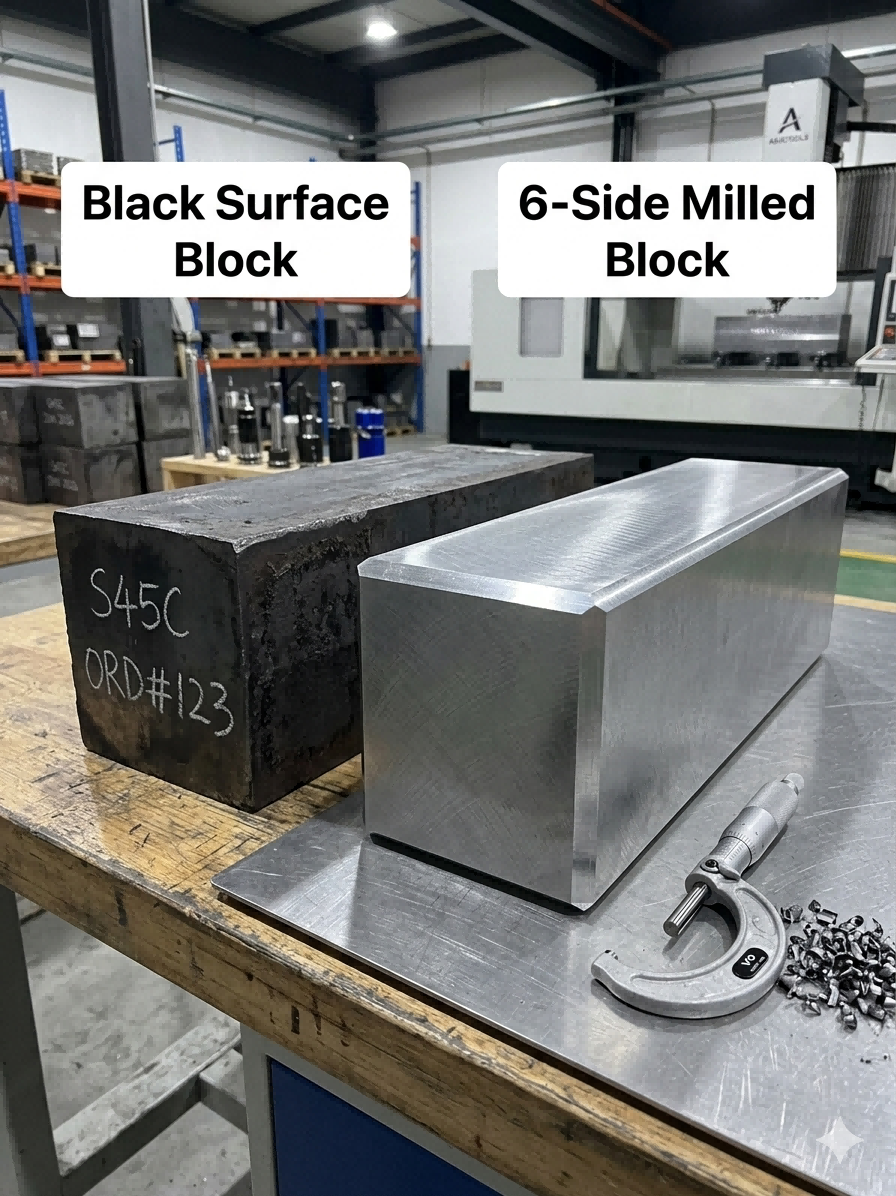
A better option is to purchase 6-side milled blocks, which means the block is already milled on all six sides with better flatness and squareness.
This reduces setup time dramatically and helps your CNC machine start real machining faster.

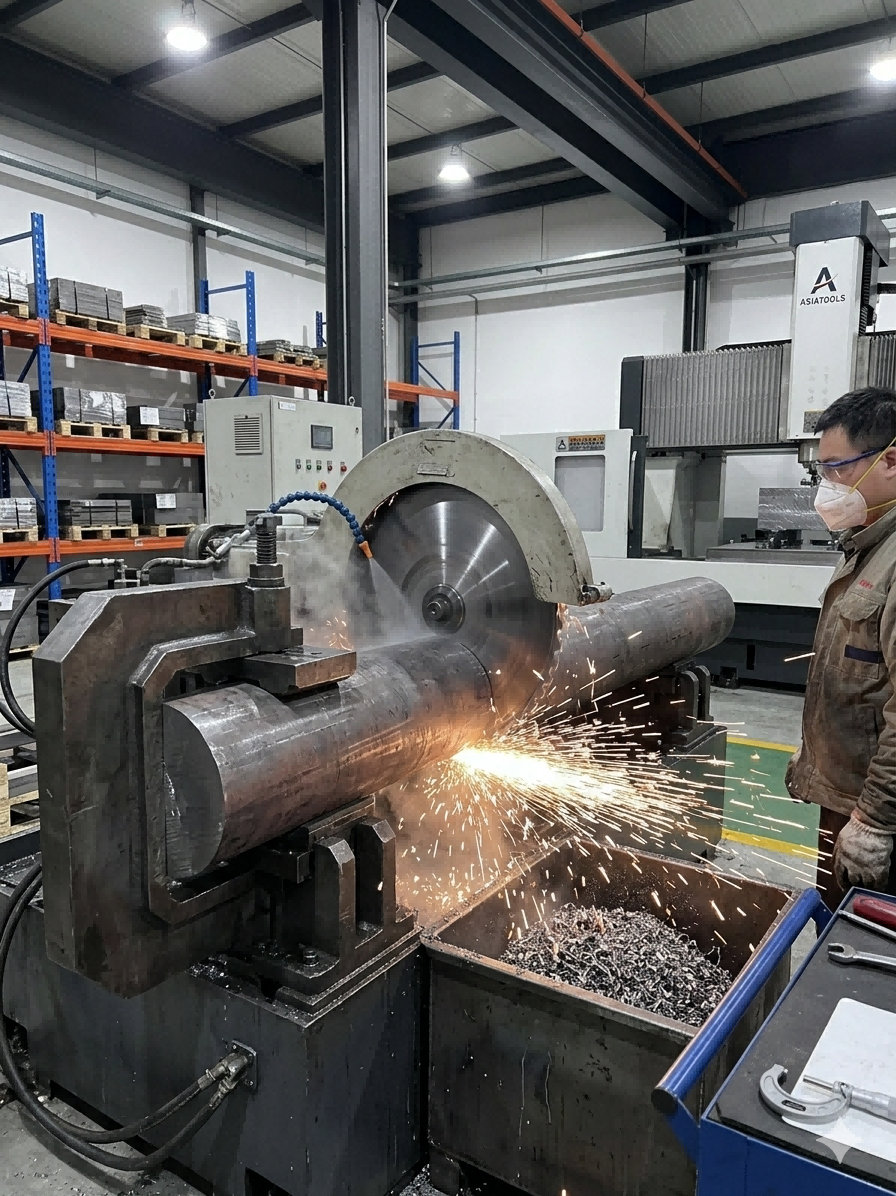
Tip 2: Circular saw cutting is better for large quantity orders
For buyers cutting hundreds or thousands of pieces, cutting method matters.
In large quantity cutting, circular saw cutting often provides:
· faster cutting speed
· lower cost per piece
· cleaner cutting surface
· less burr
This is especially true for standard size S45C blocks.
Many customers mistakenly choose band saw cutting for all jobs, but for mass production, circular saw is usually more cost-effective.
Practical example:
For a large cutting order, the customer can save money not only on cutting cost, but also on labor and insert wear in later machining.
Real Case Study: How One Customer Saved $400+ on a Large S45C Cutting Order
In real production, the steel price is only one part of the total cost. Cutting efficiency and machining preparation can make a huge difference, especially for high-volume orders.
Recently, one of our customers saw our video showing how cutting 500 pcs of S45C steel helped reduce cost. After a short discussion, he immediately increased the order from 500 pcs to 1,800 pcs.
The total quantity was around 15 tons of S45C steel blocks (and this was only a part of his full project demand).
To help the customer make a decision, we calculated the real cost-saving details based on his production conditions:
· Labor saving: approx. USD 300
· Insert saving: approx. USD 100
· Total saving: USD 400+ (excluding the extra time saved in machining)
The key reason was simple:
for large quantity cutting, circular saw cutting is much faster and more cost-effective than traditional methods.
For the customer, the benefit was not only a lower cutting cost per piece, but also a smoother cutting surface and more consistent block sizes, which reduced extra machining allowance and improved CNC productivity.
This is why many machining shops prefer ordering S45C blocks in high volume with optimized cutting plans—because the real savings come from efficiency, not only material price.
9. S45C vs P20 Steel: Which One Should You Choose?
Many mold customers compare S45C with P20.
Choose S45C if:
· you need a mold base plate or support plate
· you want cost-effective steel for general machining
· you need good machinability
· hardness requirement is not very high
Choose P20 if:
· you need better toughness and polishability
· you want stable pre-hardness
· you are machining plastic mold cores or cavities
In short:
S45C is the best choice for cost-effective structural parts.
P20 is better for mold components requiring higher performance.
10. Common Buyer Mistakes When Purchasing S45C Steel
Many overseas buyers face quality issues not because of the grade itself, but because of poor purchasing decisions.
Here are common mistakes:
Mistake 1: Only comparing price per kg
The cheapest price often comes with:
· poor flatness
· high tolerance deviation
· unstable quality
This increases machining cost and rework risk.
Mistake 2: Not requesting MTC
Mill Test Certificate is essential to confirm chemical composition and quality stability.
Mistake 3: Ignoring machining service options
Many buyers could save money by ordering:
· cut-to-size blocks
· 6-side milling
· chamfering
Instead of doing everything in-house, outsourcing pre-machining can reduce total cost.
11. Recommended Supply Form for S45C Steel Blocks
Depending on your production requirement, S45C can be supplied in different forms:
· Black surface blocks (low cost, more machining required)
· Cut-to-size blocks (better efficiency)
· 6-side milled blocks (best for CNC productivity)
· Ground surface blocks (high precision requirement)
For most mold base factories, the best balance is:
cut-to-size + 6-side milling.
This provides stable datum surfaces and reduces CNC setup time significantly.
12. Conclusion: Is S45C Steel a Good Choice?
Yes—S45C steel is one of the best choices for machining factories that want a balance of price, machinability, and stable performance.
If you are producing mold bases, machine parts, fixtures, or mechanical structures, S45C is a proven material that is widely used around the world.
However, to maximize cost efficiency, buyers should focus not only on steel grade, but also on:
· cutting method (circular saw for large quantity)
· machining allowance planning
· pre-machined blocks for faster setup
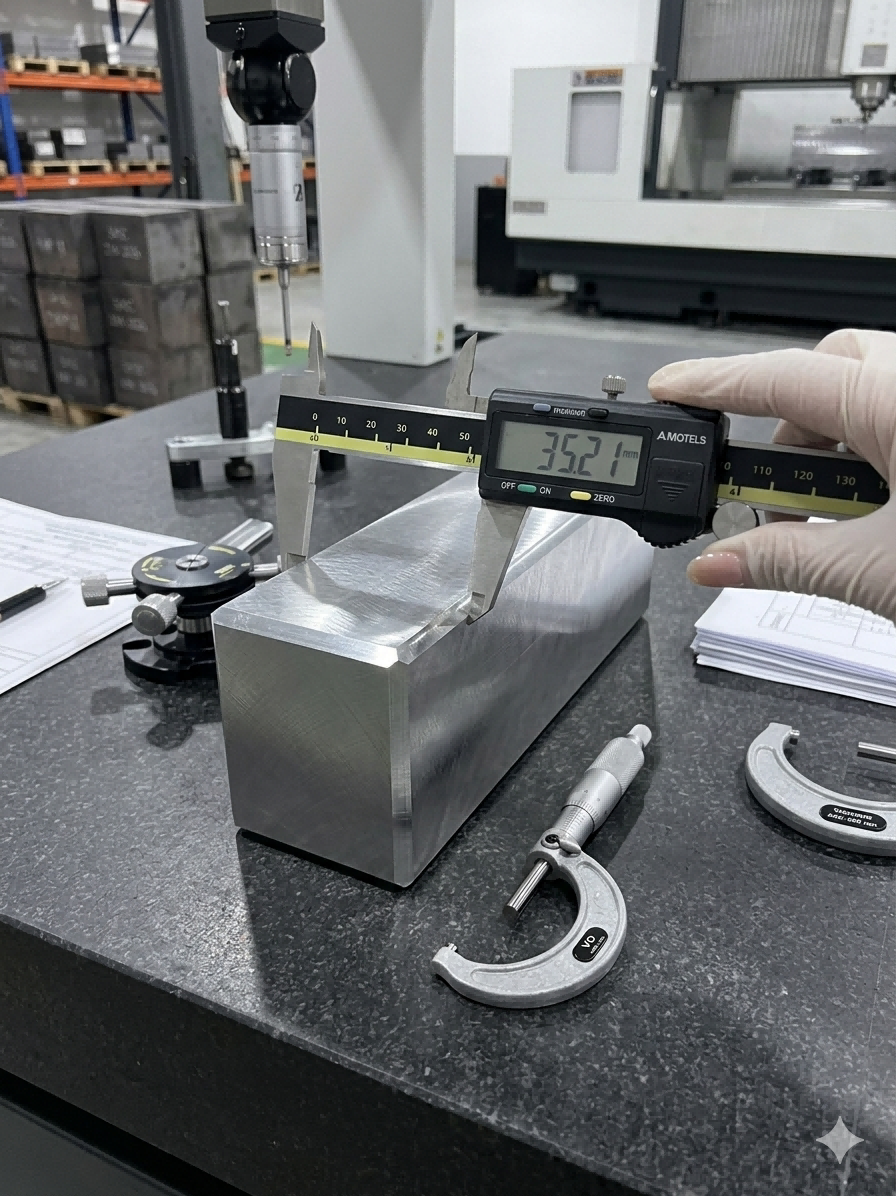
· quality inspection and documentation
When these factors are managed properly, S45C becomes not only a cheap steel—but a truly cost-effective solution.
Call to Action (CTA)
If you have a size list or drawing, we can provide:
· S45C / 45# steel blocks
· cut-to-size service
· 6-side milling machining service
· inspection report and export packing